Dealing with Disappointment, Anger and Cynicism

GriefSometimes when we are mad we have many raw and honest emotions we want to voice. Part of growing up is learning how to contain our honest reactions over events and deliberate over them to consider a right response. Sometimes our relationship with God is the same. We find ourselves to be in situations where our honest emotions and honest thoughts are that perhaps God is not good or does not even exist. And we think it is noble to go with what is honest– otherwise we are faking it. So if we feel God is not good because we find ourselves floundering in the wake of another painful disappointment that God should have saved us from– if indeed he exists– than why try to argue against what we honestly feel? Why continue to cling to a belief that is counter intuitive to our emotions? Isn’t that the very definition of fooling yourself?

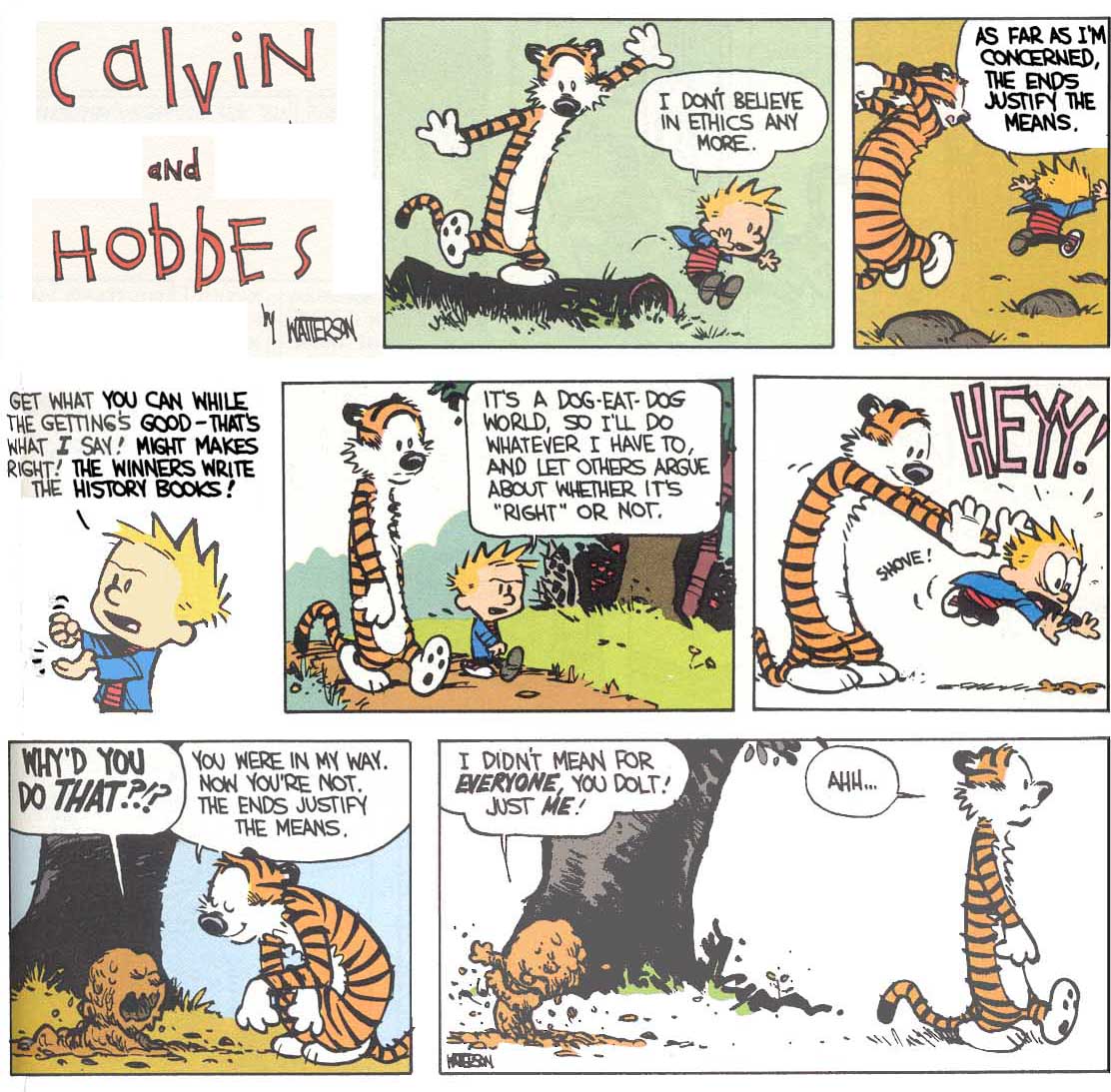
No it is not. It is a mark of growth. For again part of growing up is learning how to deliberate over our honest reactions to negative stimuli and and weigh the pros and cons before actualizing them as choices or decisions. A crying baby cries honestly whenever it doesn’t get what it wants. But when the baby becomes older we we teach the child to suppress its honest emotions and learn how to objectively consider them and maybe not give voice to them at all. But this doesn’t mean we are teaching the child to live a lie. Rather we are teaching the child that emotions–even honest ones– are poor custodians of truth.

Moreover when our children continue to grow into their teen years and want to throw in the towel on a friendship or quit a school project or give up on a dream, all because their honest thinking is that XYZ is not worth it, we try to encourage them to see their frustration and disappointment in a different light that doesn’t make forfeiture, quitting or accusatory blame a default response to difficulty.

Even as adults we recognize ourselves that sometimes situations offend our honest sensibilities and a right response on our part may require generous amounts of patience, forgiveness and tenacious perseverance. To take this path is not easy because it goes against the grain of honest feelings and thoughts. Yet to those who are mature recognize there is often a difference between honest reactions and right reactions and between what feels right and what is really right.

Someone once said we cant see the frame when we are stuck in the picture, which I take to mean we are often incapable of evaluating external events objectively when our emotions–honest though they may be– are sucking us ever so inward that our perspective becomes overly skewed and our response in turn becomes overly reactionary, defensive, lazy and self-centered rather than measured and thoughtful.

Now lets plug all this back into our initial discussion about God and disappointment. There is no escaping the fact that at times God’s promises will seem to run completely counter to our life experience. To continue to exercise faith in God’s goodness and faithfulness in the face of delayed or unanswered prayers is not easy. But is it worth it in the end? God’s greatest promise to us is, “Yes–in the end it is supremely worth it.” In fact the scriptures seem to suggest that God distinguishes between the unfaithful and the faithful on the basis of people’s response to the storms of life, calling the former “double-minded” who cannot receive anything from God and the latter “over-comers” who will inherit the earth and rule and reign in the age to come.

The greatest lie of the enemy that has infiltrated the Church is that following Christ is a deliverance from all trouble and evil days. Quite the opposite. Christ assures us “In this world you will have trouble but be courageous– for I have overcome the world” (John 16:33). The scriptures tell us we are in war of attrition and hell will do all it can to bring us into faith quenching despair.

A Christian who has lost his faith in God is a neutered Christian who is so turned inward that he poses no threat. Yet not satisfied with just that the Enemy often seeks to turn them against the Good by underhandedly nurturing their loathing and negativity with the goal of totally replacing their neutered faith with accusatory blame, cynicism and bitterness. In this way he succeeds in taking what used to be a sharpened spear of faith opposing him and turning it into a blunt and crude weapon of bitterness, accusation, cynicism and anger. Such a person has immense influence to then stab and sow similar attitudes in others and in time sour every meaningful relationship they have.

If your first response to reading this section is to say, “Well why doesn’t God do something!What’s wrong with him! Doesn’t he care about us?” Know that you have already begun to succumb to the deceiver’s schemes and lies. And know that you are not fighting “the good fight of faith” or “wielding your mighty weapons for pulling down strongholds” or “casting down imaginations” or “taking captive every thought that sets itself up against God” as clearly laid out for you in Scripture. What we don’t take captive will take us captive. Your mind and heart are in a very perilous place.

If we ever find ourselves in such a place our only way out is to repent and reckon as truth that the fault never lies with God no matter what evidence we’ve been amassing and carting around for years like an attorney ready to prosecute our Heavenly Father whenever the need arises, such as when others get to naively “Christianeezy” around us. All of this must be forcibly renounced daily until we begin to sense our anger and cynicism dissipating and becoming less of a default mindset. Then we must begin to praise God for every conceivable good thing we can think of– recognizing that “every good gift comes down from the Father of lights.” Let the blind man thank God for his hearing. Let the deaf man thank God for his sight.

Once again if your first thought to that last statement was, “Well what is a deaf and blind person supposed to be thankful for?” Know that you truly are perilously close to instinctual cynicism. And once cynicism and negative thought processes become our instinctual default mode, we stop thinking, processing and contemplating. We begin to react reflexively and angrily to situations that require even a modicum of faith or hope. “What’s the use?” becomes our un-spoken mantra we live by. As a result, the world shrinks before us. Innumerable possibilities become closed to us as we seek to play it safe and risk nothing. We become increasingly entrenched in un-teachableness as a spirit of cynicism slowly assimilates us like the Borg. The Bible calls this a spirit of unbelief and it is ruinous to our souls and those around us.

Christ often said “let him who has ears let him hear” right before he said something of great import he knew would be difficult to stomach. Those word are appropriate here. If we value whatever is left our faith and love of the Lord we must be militant in renouncing a cynical spirit daily until we begin to sense our anger and cynicism dissipating and becoming less of a instinctual response. Jesus mysteriously said, “The Kingdom of God suffers violence and the violent take it by force” (Mt. 11:12). Renouncing, repenting and thanksgiving are our weapons and they are powerful. Eventually the atmosphere of repentance, thanksgiving becomes so toxic and choking to the enemy that he releases his hold and goes off to find easier prey– ones who have the “fight” all out of them. It is critical that we put up a fight when we least want to! This is better understood as “resisting the Enemy and he will flee (James 4:7).”

Let him who has ears let him hear.

The next stage of our warfare, that not only regains lost ground but takes ground from the enemy, is our resolute praise and worship. Praise and worship not only gives to God what he is due, but it also disarms our negativity and carries our spirit man into a place of rest and recharging. I used to play an old Nintendo game where your character had to run around killing the enemy, but when his life-power meter became dangerously low, he had to run into a circle and stay there long enough to recharge his life meter bar. I can’t remember the name of the game, but I can still remember the sound it would make as your little character gets recharged for the fight ahead. I have often have this visual memory return to me in moments of great trial and exhaustion. Like my digital character, we too need to withdraw into the “secret place” (Mt. 6:6) and recharge ourselves for the battles we are in and those still ahead– we do this through praise and worship.

But a little disclaimer, or at minimum a clarification is in order because some have been robbed of an incentive to praise God due to some confusion as to what the scriptures are admonishing us to do. When the scriptures say to “rejoice in The Lord at all times” (Phil. 4:4) it doesn’t necessarily mean we are called to praise the circumstances or praise what happened– or even necessarily praise God for what happened (Though at times that may be appropriate). Rather we are called at all times to praise God– period. In other words we are called to praise and offer thanksgiving to God in spite of what happened, not necessarily because of what happened. Why? Because we recognize that God’s praise worthiness does not rise or fall on the basis of events taking place on earth– or on Proximal Centauri, in the Andromeda galaxy, or anywhere in the universe. His praise worthiness is world independent. This is critical, praise 101 stuff we need to be grounded in. Otherwise our habits of praise become situationally dependent and never transcendent and transformative. Pure praise recognizes that God, in virtue of being God, is simply so awesome that he is deserving of our praise independent of the circumstances taking place around us– whether good or bad.

In numerous places the Bible talks about a “sacrifice of praise and thanksgiving” (Psalm 116:17, Heb. 13:15). The idea of sacrifice revolves around the idea of giving something up, losing something or surrendering something of value for the sake of something greater. King David once had the option of offering a sacrifice to God with animals that were given to him by another without cost. But King David rightly recognized that such a sacrifice would be no sacrifice at all, saying, “No, I insist on paying you for it. I will not sacrifice to the LORD my God burnt offerings that cost me nothing” (2 Sam. 24:24).

The question before us today is, how much does our sacrifice of praise cost us? Do we only praise God when it costs us nothing, when there is nothing taxing our hearts? Do we only offer praise and thanksgiving when it is emotionally convenient for us? Sometimes a sacrifice of worshipping God will cost us surrendering up the “why” question and needing to fully understand all that is taking place. At other times the cost may be to our comfort such as sleeping in. Rather than shun them, we ought to intentionally look for opportunities to offer up sacrifices of praise and thanksgiving that cost us something. Sadly we all too often forfeit these opportunities because we are too turned inward with bitterness, anger or depression to recognize them.

Lastly love of God is the ultimate goal, the ultimate pursuit of our lives. Someone once said the fear of the Lord is the beginning of wisdom, but the love of the Lord is wisdom completed. To love God more than loving our need to understand and have an answer is the greatest test of faith. For me trust is love and love is trust. The Lord graced my life with wise, impactful parents, and recently they reminded me, “Matt, the scriptures say trust in the Lord with all of your heart and do not lean on your own understanding. You can’t have both. You are either trusting the Lord through difficulty, disappointment and pain OR you are trusting your own understanding of that difficulty.”



Posted in Devotion Life | Tagged , , , , , , | 2 Comments

Boko Haram, Human Tribalism and Our Sole Hope

Nigeria has been in the news quite frequently due to the kidnapping of over 200 girls by an Islamic militant group called “Boko Haram” which literally means means “Western Education is Sin.” I recently asked my grandfather about the roots of Nigeria’s current ethnic and religious strife. My grandfather worked for the State department for over 30 years and spent much of his time in Africa.

I’ll start by quoting him on Nigeria’s present crisis being rooted in ill-conceived borders established through colonialism, and then I’ll proceed to make some comments in regards to how the gospel of the Kingdom is Africa’s sole hope for tribalism and strife.

My grandfather explained that, “In the case of Nigeria, the continent’s most populous land, the political problem has its roots in colonialism. The British colonized ‘all the lands drained by the Niger River’. Not really but almost, and made them into a single colony for administrative purposes. They really represent three separate countries. Islamic North, Christian South and Christian East. On Independence African countries faced this problem, and jointly decided too much blood would need to be spilled if they tried to reset borders, so they kept the colonial, unreal, borders.”

Interestingly, Nigeria’s current issues related to imposed borders from colonial times almost seems to mirror some current Middle East issues that stem from how the land was carved up and allotted. I don’t think the Kurds and the Sunnis (or the Shiites) will ever see themselves as a homogenized Iraqi citizenry no matter what map lumps them together.

This touches on a critical fact endemic to human nature. The stiffest borders are in the heart and it is where our hatred for all things different stews. I think this is why the “Kingdom of God” as Jesus preached it (and as Christians often fail to live it) is the only hope for a world that habitually seeks to dig the trenches between ourselves deeper and wider. In that sense I’m of the opinion that one of the most powerful verses in the Bible is Colossians 3:10-12:

“And put on the new self who is being renewed to a true knowledge according to the image of the One who created him–a renewal in which there is no distinction between Gentile and Jew, circumcised and uncircumcised, barbarian, Scythian, slave and freeman, but Christ is all, and in all. So, as those who have been chosen of God, holy and beloved, put on a heart of compassion, kindness, humility, gentleness and patience.”

Only the Creator and Lord of life can take a heart of stone and infuse it with compassion, kindness and gentleness towards one’s perceived “enemy.” I almost find it amusing that Paul mentions the “Scythians” who in the 1st century were the most hated of all the Barbarians threatening the Roman empire. It is almost as if Paul was trying to think of the most extreme example a skeptic could come up with: “Surely not the Scythians? Surely we have a right to hate them! Surely we have a right to harbor animosity towards them?”

“Nope–not even the Scythians,” Paul would say.

Of course in my opinion having a Jesus-inspired Kingdom ethic founded on self-sacrificial love rather than swords and treating former enemies as one’s “neighbor” is impossible in the natural. It is just not in our “DNA.” As Paul implies it requires a “new self renewed in knowledge according to the One who created him.” In that sense it goes back to why Jesus said, “Unless you are born again you cannot see the Kingdom” (John 3:3). It is not easy seek the Kingdom above all else, but it is worth it. Yet whenever the Church considers it not worth it to “pray for your enemies, bless those who curse you and do good to those that hate you” (Mt. 5:44) simply because it’s not easy, we stop mirroring our professed Savior and start manifesting Caesar. We end up with Crusades and Inquisitions instead of Christ crucified.

The way of the cross or the way of Caesar, it was a choice Christ made that surprised the first disciples and still surprises us today. Every generation desperately needs to head the words of 1 John 1:1, “Whoever claims to live in him, must walk as Jesus walked.”

Posted in Church and Culture | Tagged , , , , , , | Leave a comment

Re-examining the O.T. Sacrificial System

Sacrifice

What’s the deal with the Bible and blood? What was the point of all that animal sacrifice? Why does the N.T., in referencing Christ’s death, often focus on the blood of Jesus? If Christ’s death was needed for our freedom from sin’s enslavement, why couldn’t Jesus just die at childbirth or die from pneumonia as an adult? Why is their an emphasis on his blood being spilled for our sins?

I hope to deal with some of these questions in the following post.

I was reading in Leviticus 17:10-11 today where God thoroughly condemned the eating of blood, the consequence being the possibility of death (i.e. “cut off”). The only reason given is that life is in the blood and God ordained blood for atonement, saying, “the life of the flesh is in the blood, and I have given it to you upon the altar to make atonement for your souls.”

However I found myself still scratching my head and desiring a greater reason why the consequence for eating blood could be so severe as to possibly warrant the death penalty.

The following is what I have come up with. To begin it is noteworthy that in repeated places throughout the Scriptures God declares that he does not desire the blood of bulls and goats but rather a contrite, obedient, steadfast, thankful heart (1 Sam. 15:22, Isaiah 1:10-11, Hosea 6:6-8, 8:11, Mt. 9:13, 12:7, Ps. 51:16-17, Ps. 50:7-15). In fact when Israel lapsed into sacrificing animals out of tradition, without accompanying repentance, God condemned their animal sacrifice as being empty and meaningless. That is critical to note. Clearly God has always been most concerned with the conversion of the heart towards righteousness.

As such I believe sacrifice and specifically blood-letting was meant to remind through demonstration the severe consequences of sin (enslavement leading to death) and be a motivating factor not to continue in sin. But what happens when people stop considering the consequences of sin in their own lives? What happens when people stop reflecting on the high cost for sin’s atonement? What happens when sacrifices are done out of empty tradition and habitual ritual? What happens when people start viewing the blood of sacrifices as a common, ordinary thing? (More on this specific point at the end).

Apparently God realized the propensity for his people to lose sight of the costly consequences of their sin, so God was very intentional about establishing strict boundaries around one’s treatment of blood. Given that even science affirms that “the life of the flesh is in the blood” (Lev. 17:11) and that to date no laboratory has been able to create or reproduce what the body makes naturally, then it is no exaggeration to assert that blood is the most valuable resource or commodity on the earth. God apparently thought the same and in Lev 17 God institutes a strict policy that blood is not to be eaten on the basis that it was given to men to atone for their sins.

Therein is the key. If blood is perceived as “life itself” and the most valuable commodity on the planet, and if God intended the shedding of blood to signify to all the high cost of one’s sin, then obviously its value would be greatly diminished in the eyes of everyone if it could be served up on a dinner plate like fried chicken!

When an animal was sacrificed on behalf of a sinner, the sinner was meant to see that blood and realize that because of their selfish actions, the debt owed had to be paid with the most valuable commodity on the planet: life. Something needed to die. It is somewhat a mystery to me, but sin exposes us in a manner that must be covered. To atone actually means “to cover.” But not just anything can be used to cover or atone for sin. Adam realized this early on. When Adam and Eve sinned everything changed about their self-awareness and world-awareness. We often hear a lot about the forbidden fruit taken but not about the name of the tree it came from: the “tree of knowledge of good an evil.”

Think of it as the tree of lost innocence. Immediately they began to feel self-conscious of their exposed nakedness. As a result they attempted to cover themselves with leaves. But it was not sufficient. God steps into the picture and atones or covers their nakedness with the hide of animal, implying two things: 1) an animal had to die in order that their exposure to a new, changed world could be covered, 2) sin always exposes us to a greater loss of innocence if left uncovered or unaddressed and 3) God’s motivation behind covering is our protection from being further violated by an evil world.

By way of example: think of two children growing up all alone on a remote island. They possess no clothes and thus wear no clothes. The entirety of their lives has been spent blissfully unaware of the greater world around them– that is until one day everything changes. They are picked up by a fishing vessel and dropped off at the harbor of New York city–still naked. Now keep in mind they have never been exposed to a racy magazine, a T.V. show or even a lewd joke. The distinction between nakedness and being clothed is somewhat lost on them. They begin to walk down the dark alley ways of New York City uncovered and nakedly exposed to the eyes, thoughts and imaginations of all those around them. What do you think will happen to them in time? They will no doubt be preyed upon and violated in ways that never would have occurred had their naked innocence been covered up and hence protected. Moreover being used and victimized will become their “new normal” since they have no point of reference telling them such violations of their innocence are wrong and destructive.

All that to say sin uncovers us and God seeks to recover us. Sin removes pieces of our “original clothing” (i.e. the image of God) and causes us to be further exposed to the “image of the world” in a defenseless manner. It could be God’s institution of animal sacrifice was a way for the remaining purity of his people, the “image of God,” to be protected by covering their exposure due to sin.

I need to say a short word on covenant. In the ANE culture when covenants were established it was customary for an animal to be sacrificed and split down the middle with both parties walking down the middle, symbolizing, “If I break covenant with you, let it be so done to me.” Now what is interesting to note is that when God first established a covenant with Abraham, the scriptures record only God walking between the split sacrifice. This in turn tells us God knew the day would come when he alone would absorb into himself the consequences of covenant-breaking sin and walk through the middle of death on behalf of a people who broke covenant with him. In the Hebrew language covenant literally meant “to cut a covenant” and therefore could not occur without sacrifice. That is why when Christ lifted up the wine glass and split the bread in two pieces, he declares, “This is a new covenant I give to you.” He knew he was about to walk through the split pieces, right through the middle of death just as he did with his Father years before when the Triune God made covenant with Abraham and walked through the split sacrifice– but this time he will be the sacrifice. 

With covenant now in view, we can better understand that life can be reduced to one of two spiritual realities. We are either offering ourselves to God in faithful covenant and becoming enslaved to righteousness and life, or we are divorcing ourselves from covenant life and becoming enslaved to sin and death. This is why Paul warns, “Don’t you know that if you offer yourselves to someone as obedient slaves, you are slaves of that one you obey—either of sin leading to death or of obedience leading to righteousness?” (Rom. 6:16).

Sin is a progressive violation– like a parasitical infection. It is never dormant and never content. It wants to consume, grow and enslave. James made this point when he essentially said sin conceived will grow up and eventually bring forth death (James 1:15). But perhaps that is a clue. If death is the final consequence of sin, then perhaps death is also the answer to sin.  Perhaps there are two kinds of “death.” There is death due to sin, and then there is death to deal with sin. If the power of sin introduced death to humanity, then perhaps death can also banish the power of sin from the sinner and the one holding the power of death over that sinner–i.e. Satan. This seems to be suggested in Hebrews where the writer declares that the central mission behind Christ’s death on the cross was to “destroy the one who had the power of death –the devil” (Heb. 2:14).

In the N.T. Christ’s death and resurrection dealt with the consequence of sin (i.e. death) and the power sin itself. That is to say Christ’s death and resurrection brought death to death, and essentially neutered its power over our lives. “Where O, death is your sting, where O, death is your victory” is the declaration of triumph we have in Christ according to 1 Cor. 15:55.

But since Christ’s coming and death occurred after the O.T. sacrifices at a time referred to as the “fullness of time,” the question that presents itself is, what to do in the run-up to that time? The writer of Hebrews speaks of the O.T. sacrificial system as foreshadowing what was to come, or a temporary copy of things to come. The O.T. sacrificial system could not conquer the power of sin and death as Christ’s sacrifice later did, but it was instituted as a means to temporarily forestall the death of the sinner who broke covenant with God, by substituting in the death of an animal. These are deep mysteries we cannot fully plumb.

What is clear is the Mosaic law establishing that the cost or the “wages of sin” is death just like the Scriptures will declare years later in Romans. But we need to be careful here. It is not a cost paid to God. We are wrong if we think God established animal sacrifice as a means for us to pay God back for our sin. The sacrificial system was not instituted as a means to buy God off with blood. That was the pagan viewpoint of animal sacrifice. Rather the sacrificial system and the bloody death of an animal was what it cost for one to recognize he or she was a sinner who broke covenant with God! It was always about the heart being driven towards righteousness and faithfulness and away from wickedness and evil. The Mosaic sacrificial system departs from other ANE pagan sacrifices on this point. The ANE pagan notion of animal sacrifice was rife with the notion that one could manipulate one’s god for good fortune. It had no ethical overtones whatsoever and it certainly had nothing at all to do with forgiveness or atoning for one’s sins.

But for the Hebrews the costly lesson that needed to be learned was that sin is a contagion and when left to its own devices it kills life by polluting, profaning and defiling life and ultimately cutting us off from the source of life. We become like a branch cut from a nutrient rich tree and replanted into plastic rubbish and garbage. Or as stated earlier, the “image of God” becomes increasingly lost to us as we pick up the “image of the world.” If being made in the “image of God” is the true mark of our original humanity then sin will always have the effect of de-humanizing us. We will become a shrunken, shriveled up version of our true selves– our souls slowly wasting away unable to feed off a world bloated and obese with sin’s “turkish delight.” The O.T. often spoke of any activity that did not not resemble or reflect God’s orginal design for the  world as “profane and unclean.” As such any move towards the profane and the unclean is consequently a move that will take one futher away from a holy God who defines our very humanity. He is the “password” to our “login” in discovering life itself. 

We often hear the phrase, “sin separates us from God,” but the breach is not primarily caused by God cleaving the ground between us and him, stating you stand there and I’ll stand over here. Rather the separation is a direct result of walking toward the antithesis of good, of whom God is the paradigm. It takes no genius to see that the further you walk towards the left, the further away you are from the right. Similarly the closer you walk towards the profane and unholy, the further you are walking away from the sacred and holy. Sin is always a matter of adultery with the world leading to self-chosen divorce from God.

In the context of covenantal relationship and restored communion, reconstituting a severed relationship due to broken trust requires genuine contrition and repentance. However because covenant and communion with God is primarily a heart matter, it means contrition, repentance and purification is something that must take place on the inside not the outside. That is what the Pharisees and scribes missed and why Jesus called them whitewashed tombs on the outside filled with dead men’s bones in the inside. Moreover this is why the Mosaic sacrificial system as a whole was limited in what it could achieve in terms of man’s greatest need—i.e. presenting an internal, perfect conscience before God.

The O.T. sacrificial system was instituted as a means to drive man away from sources of defilement and back towards the Lord. But it was limited in that it was only an outward act, an outward gesture and therefore could not by itself achieve inward cleansing and purity of conscience. At best it could only hope to motivate someone to reflect upon their life and recognize that sin was inwardly ravaging their souls and only repentance and obedience could restore them to life and communion with God.

So we can sum up the ultimate intentions of the Mosaic sacrificial system as an incomplete means to bring distant hearts near to their creator. Sin had caused a breach between God and man. The O.T. sacrificial system would temporarily cover over sin and allow man to continue to live without fear of impending judgment. Bloody as it may be, it was rooted in mercy towards sinners. But sacrifices for sins could not deal with sin itself. It could not “take sins away” (Heb. 10:4; 9:26). And it could not perfect or cleanse the inner conscience (Heb. 9:9,14).

However what the old the covenant could not do the new covenant came to address. Through Christ’s shed blood our sins have not just been covered and atoned for: they have been buried (Rom. 6:4)! Every accusation of the enemy and every just condemnation of “falling short” of God’s glory has now been “nailed to the cross” and is no more (Col. 2:4). Through Christ’s shed blood we have obtained an eternal redemption that not only sets us right temporarily but declares us to be in the right eternally (Heb. 9:12; 10:14). That is why the writer of Hebrews emphatically says:

[Jesus] has obtained a more excellent ministry, inasmuch as He is also Mediator of a better covenant, which was established on better promises. For if that first covenant had been faultless, then no place would have been sought for a second. Because finding fault with them, He says: “Behold, the days are coming, says the Lord, when I will make a new covenant I will put My laws in their mind and write them on their hearts For I will be merciful to their unrighteousness, and their sins and their lawless deeds[b] I will remember no more It [Mosaic covenant] was symbolic for the present time in which both gifts and sacrifices are offered which cannot make him who performed the service perfect in regard to the conscienceFor if the blood of bulls and goats and the ashes of a heifer, sprinkling the unclean, sanctifies for the purifying of the flesh, how much more shall the blood of Christ, who through the eternal Spirit offered Himself without spot to God, cleanse your conscience from dead works to serve the living God?(Heb. 8:6-8, 10, 12; 9:9, 13-14).

With that said, let’s return to our initial question as to why God was so adamant that blood be off the diet menu for Israelites (Lev. 17:10-11). It has already been noted that if God was trying to set apart the value of blood as being the costliest element on earth, with the intention being that the heart of man would be pierced through and gripped by the enormity of his sin, then the last thing you are going to do is allow your people to treat blood as a common, ordinary substance to be taken in and pooped out.

In the West we don’t particularly eat congealed blood, so it is no big loss in our minds. But in many cultures today eating congealed blood is considered delicious. And in the ANE culture of biblical times the eating of blood was a common practice in the pagan world, often done in concert with their blood sacrifices. But God says to his people, “It is not to be so with you.”

Now if God were to have said, “Thou shalt never drink milk, for the milk of a cow’s utter has been ordained to atone for your sins,” well then I would have real heartache because I love me some milk! Now just imagine if the cost of your sin was to bring your cow to the temple wherein a priest would fill up a pail of milk and then pour it over the alter to represent the high cost of your sin. Then imagine going home and milking your cow again by your own hand and pouring the milk down your gullet along with some manna bread and maize nuggets.

To treat the cost of sin on equal terms with food that is taken in and eliminated by the body is to treat the price of your atonement as a common, ordinary thing. If the entire sacrificial system was meant to demonstrate the enormity of one’s sin and bring conviction, contrition and conversion to the human heart, then it makes sense why God would enact such a stiff penalty on those that ate blood and treated it as a common element.

This in turn can help us make greater sense out of Hebrews 10:28-29 wherein the writers states that if the death penalty was handed down on those who “rejected the law of Moses”, of which the proper handling of blood was paramount, then:

Of how much worse punishment, do you suppose, will he be thought worthy who has trampled the Son of God underfoot, counted the blood of the covenant by which he was sanctified a common thing, and insulted the Spirit of grace?

What does it mean to treat Christ’s shed blood as a “common, ordinary thing?” Other translations opt for stronger wordage such as “profane, unclean or unholy.” But the overall sense is that the blood of Christ is being judged to be without special merit and as such belongs to general commonality rather specificity.

That is dangerous.

It is like radiation therapy. It is the only treatment for some forms of cancer, but if it not handled properly, if it is treated without special consideration, or if it treated as a “common thing”— no different or stronger than sun-tanning– then it’s mishandling is often it’s own death sentence. In other words, when we view the blood of Christ as being irrelevant to our lives and judge it as having no special place in our lives and having no special claim over our lives of sin, it is not only the greatest insult to heaven, but it also carries with it its own death penalty. We have removed from our lives the only means for our sins to be taken away.

It is like a prisoner rejecting a presidential pardon on the basis that it is an irrelevant piece of paper on par with toilet paper. Because he judges it as possessing no real or special value to his life, he is consequently choosing to reject the only means for his life to have a clean slate and a clean conscience. Such a person would be locking himself up from the inside and tossing the key away.

Consider another helpful illustration. Imagine being shipwrecked on the high seas and hoping for rescue as you struggle to tread water and keep your head from going under. All of a sudden a rescue boat appears and tosses you a life preserver to pull you in. But instead of receiving it you reject it as being irrelevant, common and ordinary like floating seaweed. You are rejecting your only source of rescue because you judge it wrongly. You judge it as common and ordinary.

To judge the blood of Christ, the most valuable commodity in the universe, as being inconsequential, irrelevant to your soul and belonging to the commonality of other religious claims is to rob yourself of your only hope and lay upon yourself your own debt of sin and a terrifying expectation of future judgment when the universe is audited, heaven and earth merge into one, and all that is still attached to sin becomes undone and vanquished forever.


P.S. One issue that still gnaws at my mind is the Mosaic law commands the death penalty for so many sins. So it is not sufficient to say the sacrificial system was a means for God to forgive sinners of their sin, because the Mosaic law is filled with examples and commands to enact the death penalty on those who transgress the law in other areas—such as human-child sacrifice and sexual perversion. Why could sacrifices atone for some sins but not others? What exactly is going on there? I’m not entirely sure. It could be that some sins needed to have a no tolerance policy so that the Israelites would not use God’s mercy and grace to renegotiate ethical or moral boundaries. It could be that God knew that the Israelites would rapidly cease to exist and be consequently subsumed into the pagan “Borg collective” if clear demarcations of holy and unholy, clean and unclean were not laid down with strict consequences enforced to serve as serious reminders. Thoughts?

Posted in Devotion Life | Tagged , , , , , , , | 2 Comments

Was World Vision Rightly Rebuked?

Was World Vision rightly rebuked for their bizarre and contradictory public affirmation of same-sex marriage?[1] The answer to the question is both “Yes” and “No.” Yes, they needed to be rebuked, but that doesn’t therefore mean all those that took it upon themselves to do the rebuking, did so with the right motives or in the Spirit of Christ. As I have read various responses on the blogosphere from across the spectrum, I have been struck by the viciousness of people’s remarks towards World Vision. It is indeed sad. However I have also been struck by the indifference and subdued reaction by leading Christians who felt World Vision should have been given a pass simply because of the nature of their work. Though I am a big fan of Scott McNight I believe his critique and response falls in this category.

He writes:

When I think of World Vision and the monies Kris and I send to World Vision (and still will send should you care to know and we are thinking of adding to our support — and believe when I say I despise the culture wars and our support of WV has nothing to do with that), I think of words from the brother of Jesus at James 1:27, words that many of the critics of World Vision’s recent decision need to read with some integrity- and soul-searching:

Religion that God our Father accepts as pure and faultless is this: to look after orphans and widows in their distress and to keep oneself from being polluted by the world.

… The critics of World Vision, if the numbers are right, may be right in their own minds about what to believe, but they won’t be right before God if they lift those donations and don’t sink them into compassionate donations toward those in need in our world. And they are surely not right if they have merely taken an opportunity to pounce on brothers and sisters though they do not care about orphans and widows (this is not just about children, folks, it is about widows, the most neglected segment in the church today — read Miriam Neff’s book about widows, please).

Yes, many critics of World Vision will appeal to the last clause, a clause that says the kind of religion that stands before God the Father is about keeping “oneself from being polluted by the world.” But this clause does not sanctify what many think it sanctifies.

What is the world? In James that word will refer most especially to power-mongering, violence, and verbal assaults on one’s brothers and sisters. Notice James 1:19-21 and then 2:5 and 4:4 and especially James 3:13-15. James, as always, has much to say.

A good-before-God religion cares for the needy and eschews violence against one’s brothers and sisters [2].

Now I do like what McNight does here with James in addressing the vicious vitriol that World Vision has received by alleged Christians. He is quite right about that. But he is wrong if he thinks James’s statement to “keep oneself unpolluted from the world” is primarily a reference to uncharitable, vicious, mean-spirited attacks on our brothers and sisters. This just isn’t correct. In James 1:14-22 he clearly has in mind sinful passions, moral filth and disobedience to God’s moral commandments and mandates (which would necessarily include prohibitions to engage in homosexual acts, making marriage out of the question.)

Moreover McNight is profoundly mistaken if he thinks World Vision’s near decision to approve of same-sex marriage (and thereby jettison God’s sacred vision of family) is less significant or secondary to World Vision’s humanitarian efforts on behalf of widows and orphans. On the surface it is understandable why one might think that if  “widows and orphans” are being helped, then everything else must necessarily become secondary by default.

But this is not so–especially because of World Vision’s unique claim to be a para-church ministry. It is misnomer that “all sin is equal” in the eyes of God. Though we all may be equally in need of forgiveness and a Savior, there are certain sins and behaviors that are more of a threat to God’s created order than others. In particular God instituted both sex and marriage to exist in a sacred context for the betterment of humanity. We live in a day wherein that sacred context is not just being questioned but undermined from multiple directions.  There exists a concerted attack by the enemy to subvert the very foundation of God’s creative genius in encapsulating the fragility of human life within the strong cords of marriage and family. To overthrow God’s genius and replace it with “what seems good to us” can only result in discord where there was once order. 

As such this discord will spread and create more victims out of the most vulnerable–like the very orphans and widows World Vision seeks to aid. Sin is nothing less than behaviors and attitudes that lie outside God’s moral intuitions for the betterment of humanity. God in his wisdom informs us that the virus of sin can only be contained by repentance not redefinition.

Since World Vision’s decision would have made women and children even more vulnerable to a discordant, fallen world, then it matters little that their end goal is to ultimately alleviate the suffering of widows and orphans. Like a doctor with tuberculosis coughing all over his patients as he makes his rounds to treat them, World Vision would unwittingly be spreading a destabilizing, secular anthropology in the name of Christ. That’s the crucial point not to be missed. We cannot forget that World Vision markets itself as being the premier humanitarian arm of the Church. This is not an article that is trying to put that assessment in doubt. On the contrary, there is abundant evidence they do excellent work around the globe. But to intentionally subvert a core pillar of Christian anthropology through redefinition is to become a carrier of the very infection that creates scores of orphans and widows in the first place!

And that is the central thesis I am making. I believe many well-intentioned individuals have grossly miscalculated and underestimated what was truly at stake with World Vision’s decision (prior to its retraction) to affirm gay marriage as being within the scope of their biblically informed policy concerning marriage, fidelity and family.

Let us note that the ruin of any nation begins with the family.

Nothing less than a return to God’s glorious vision of family can heal the open wounds of a culture wherein orphans and widows are the collateral damage time and again. The Church has the only true anthropology for humanity and as such is its only hope. The social ills of our world are a result of successive generations willfully departing from God’s creational intention and sacred anthropology.

As someone who has worked with both orphans and widows in South East Asia for 6 years I can assure you that the majority of orphans and widows are a direct result of the systemic breakdown of the family– namely sexual promiscuity and fathers jettisoning their parental responsibilities and putting their wives and kids on life support. This in turn creates desperate poverty and greases the wheels for child-human trafficking.

I fully recognize that individuals like Scott McNight are opposed in principle to gay marriage on biblical grounds. Yet they seem to imply if people were to lift their donations due to World Vision’s seeming disregard of (biblically informed) sexual morality, that itself would be wrong. 

Why? Once again the implied narrative is that humanitarian efforts trump sexual mores imbedded in Scripture. Well that may be true if one is already dealing with a secular organization that has no affinity to the Church and does not claim to speak for her. For example I would have no problem giving a donation to the Red Cross for tsunami relief no matter their standing on gay marriage. It just isn’t an issue. But again the Red Cross doesn’t proclaim to be the Church in action. 

However World Vision does. And that’s the difference.

The Church and it’s para-church ministries are not only called to alleviate human suffering. They are called to be carriers of a Christian anthropology that recognizes that people are held captive to the lies of the Enemy from which many of the world’s social ills arise. They are called to bring a message of hope and healing in Christ that redeems, restores and realigns people as they are ushered into truth, light, justice and love. This is the Kingdom of God.

And sexual identity and conduct is not an issue on the peripheral fringe of the Kingdom. It lies at the core of the Christian ethos on what it means to be human and how we are to relate to each other. The Kingdom of God is identified by what it forbids just as much as by what it approves. We often forget that.

Furthermore we ought to clear up the misconception that someone’s sponsorship of a child goes directly to that child. That is not how it works. It goes into a pool. I don’t believe any child was actually dropped. Secondly those that I have read who did withdraw their support from World Vision did not subsequently pocket it. They reinstated it into organizations believed to be more consistent with biblical teaching. After all if World Vision is going to distinguish itself as being an extension of the Church in action, then they ought not take a position so clearly at odds with Scripture. 

But the larger point is that money in the form of child sponsorships IS NOT the cure and never will be. Rather it is modeling God’s Kingdom revelation of how men and woman come together and stay together. It is reaching into broken lives and introducing them to a vision of what God intended FAMILY to be– for the sake of the next generation. I cant stress that enough.

As good as World Vision is on the humanitarian front, there is no denying they attempted to trade in God’s vision of family for one concocted and fabricated by un-renewed minds and self-centered hearts– earthly, worldly wisdom as James would no doubt put it. Any organization or church that does so will cease to be God’s agent of transformation. Instead they will enter into a work solely of rehabilitation. They will attempt to rehabilitate what is wrong, rather than transforming what is wrong into God’s Kingdom likeness.

People we cant rehabilitate what the Bible clearly tells us needs to be crucified– our passions, desires and natures that miss the mark of God’s ideal [3]. World Vision wanted to make it easier for those outside the orbit of what God accepts as a family to be part of their worldly informed idea of what it means to a family. In turn they would be importing and disseminating a worldly-wise definition of family around the globe, but not a Godly wise one. As a friend once stated to me: “Things either promote the kingdom or they resist it.” 

World Vision would have unwittingly become part of the very problem they are trying to alleviate. They were right to be called out for it. Does McNight not think James would have called them out too? Notice I said “called out.” I am not judging anyone for departing from them or sticking with them– that is not my place. But they definitely needed to be rebuked. As a fan of Scott McNight I am a little disappointed that he does not appear to discern how World Vision was almost co-opted by the Deceiver to subtlety attack the family as God intended it for the health of our world– and in so doing put at risk an even greater number of widows and orphans.

Same-sex marriage is nothing less than a deceptively subtle attack on the sacredness of family as God intended. We are talking i-beams people! Not wallpaper and trim. Let the secular world go about its way redefining and recasting humanity into its own image. But let it not be so with us the Church! 

UPDATE: On the one hand I applaud World Visions president Richard Stearns for wanting to take a position that is fair and equal to all. But on the other hand, as a professed, evangelical Christian representing a Christian charity, he ought to know that not all actions and behaviors are equally endorsed in Scripture. This is not to say that World Vision or any Christian organization can’t hire persons who admit to same-sex attraction. Same-sex attraction is a state or an orientation. An individual can be a homosexual and still be a born-again Christian. The Bible only condemns homosexual acts. So whether it be genetic, developmental or a combination of both, homosexual attraction or orientation by itself is not sinful. However it is a defect and tells us something is amiss. The mere fact that it is impossible for any homosexual union to reproduce life should be the first tip-off that something is awry and ought not to be considered normative or healthy for human flourishing and family. All that to say the Church desperately needs to distinguish between homosexuality as a state or orientation and homosexual acts. To better understand the difference see the following article: http://www.reasonablefaith.org/a-christian-perspective-on-homosexuality

World Vision would have been better served if they simply released a statement saying they will hire homosexuals who choose not to act on their orientation for the sake of Christ. Such people do exist and see it as their present cross to carry. They ought to have an equal place of service in God’s Kingdom work. I would have applauded World Vision big time had they made such a policy qualification. But to approve of same-sex marriage is to endorse homosexual acts– acts that scripture clearly condemns. 

Lastly I wholeheartedly welcome Richard Stearn’s humble retraction of World Vision’s short-lived policy mistake and applaud the genuine spirit of teachableness and humility he demonstrated in allowing their core values to be realigned by their fellow brothers and sisters in Christ. [4] It is my hope that God would use this experience to grow and expand World Vision’s capacity to be a torchbearer of the light of the Kingdom around the world. 


[1] In an interview with Christianity Today in March 2014 Richard Stearns, World Vision’s president, declared: “Changing the employee conduct policy to allow someone in a same-sex marriage who is a professed believer in Jesus Christ to work for us makes our policy more consistent with our practice on other divisive issues. It also allows us to treat all of our employees the same way: abstinence outside of marriage, and fidelity within marriage.” Stearns then bizarrely added that their decision was not an official endorsement of gay marriage, saying, “It’s easy to read a lot more into this decision than is really there. This is not an endorsement of same-sex marriage. We have decided we are not going to get into that debate. Nor is this a rejection of traditional marriage, which we affirm and support.” To say there exists a contrariety within his statements is an understatement. He says they are not taking a position on same-sex marriage either way and then takes a position! He endorses same-sex behavior and marriage as being within the scope of their policy (which is itself informed by Scripture) and to say that is not an endorsement of gay marriage is sophistry of the highest form. 
[2]http://www.patheos.com/blogs/jesuscreed/2014/04/07/world-vision-and-the-brother-of-jesus/#disqus_thread 
[3] We all know sin is any attitude or behavior that lies outside God’s Kingdom ideal–that includes both gay marriage and bigoted hatred of gay people. It is the unfortunate belief of our world today that anything less than approval of gay marriage is by definition bigoted and hateful. But that just isn’t true. People can tolerate both gay marriage and their supporters by simply disagreeing with them agreeably. For that is the definition of tolerance– otherwise you would not tolerate the views of others, you would agree with them!
[4] http://www.christianitytoday.com/ct/2014/march-web-only/world-vision-reverses-decision-gay-same-sex-marriage.html 
Posted in Church and Culture | Tagged , , , , , | 4 Comments

A Debate: Can God be Deduced from Big Bang Cosmology?

I recently took part in a minor, online debate over evidence for God’s existence that can be deduced from scientific, established facts concerning the absolute beginning of our universe through a cosmic event that is commonly referred to as the Big Bang. I do not pretend to be an expert in the slightest on cosmology or quantum physics, but I do like to engage the literature when I can, and it is not difficult to see that many modern physicists are seeking to evade the obvious, (theistic!) implications of an absolute beginning of space-time–which is exactly what the standard model of Big Bang cosmology points to. One such physicist is Lawrence Krauss, a self-professed (not to mention self-obsessed) atheist. His brilliance not withstanding, he is unquestionably evading and running from the logical ramifications associated with an absolute beginning to space-time in the finite past. First and foremost is the fact that if everything (matter, space and time) came into existence in the finite past, then it logically entails that the cause of the universe must transcend space, matter and time. Either that or the universe and all that it consists of popped into being, uncaused out of nothing–which is logically absurd! Krauss knows this and so his ploy is to jettison the ordinary meaning and usage of the word “nothing” (which literally means not ANYthing) and substitute it with his own meaning which more or less works out to mean: “SOMEthing that existed prior to EVERYthing and brought everything into existence–but it can’t be God!” The following exchange is with an atheist, we will call Colby, who is a fan of Lawrence Krauss and tried to defend his position against my initial charge that Krauss, though brilliant, fails to think through the core implications of BB theory and connect the dots that deductively fall out of an absolute beginning of space-time.

Me- The Theist: If Krauss wasn’t so pompous he would be more agreeable to listen to. His critics are correct that many of his comments are simply self-defeating and inane. Krauss absurdly declares that the universe came from nothing and then tries to qualify “nothing” as a multi-verse giving birth to our universe. But a multi-verse is not “nothing” it is a very big something! Nothing–philosophically and scientifically means “not ANYTHING.” But Krauss is too afraid to deal with this fact because it leaves him too naked and exposed to theologians/philosophers and the kalam cosmological argument. Sad to see a brilliant mind be so closed-minded out of fear. 

Colby- The Atheist: We all agree it’s not the philosopher’s “nothing” that’s being discussed. Such a “nothing” logically can’t exist. This is why Krauss uses a more common definition which allows inspection by scientific methods. Philosophers may want to insist scientists use a philosophical definition, but they’re not really in a position to dictate scientific vocabulary.

Me-The Theist: You say, “such a nothing can’t logically exist.” The point is contemporary cosmology asserts that prior to the Big Bang literally NOTHING  existed– as in NO THING existed. That is the brute fact of science Krauss is running from. What you should have said is that it is logically impossible and absurd to state from nothing everything came! For from nothing nothing comes.  When scientists, not just philosophers, speak of NOTHING existing prior to the singularity they mean “not ANYthing.” There was no atoms, matter, no space, no time. There was literally nothing in existence that our universe could borrow from to create itself which is why Big Bang cosmology screams out for an explanation for how everything (our universe) came from nothing. How did non-being being bring forth being? How did non-existence bring forth all existence? The ONLY logical explanation is to say the cause of the universe was an immaterial, timeless, spaceless, eternal, self-energizing entity–which is pretty much a scientific definition of the properties of God. Krauss seeks to evade this and say our universe did indeed come from “nothing” but then qualifies nothing as a multi-verse spitting out universes. That is not nothing! That is something! It only pushes the question back further, “What is the cause of the multi-verse?” He is simply being coy and playing on people’s ignorance. 

Colby- The Atheist: The BB theory does not address what did or did not exist prior to the BB. The calculations are only good from Planck time onward. Please provide a citation where the BB theory says what you say it says. As for “nothing”, you need to use the definition Krauss painstakenly outlined. You’re using a definition Krauss specifically said is not what he’s talking about.
Yes, we all agree the philosopher’s “nothing” is a ridiculous thing for “something” to arise out of. The confusion only arises when you insist on using a definition no scientist is using.

BTW, the “multiverse theory” is a mathematical calculation only. No one claims there’s evidence it represents reality. It’s an interesting possibility not ruled out by anything we currently know about physics. That’s all it is. Another nit-pick: No one claims the universe did come from “nothing”. The claim is what we know about the physics of the universe doesn’t preclude it. The universe may have come from nothing (as defined scientifically, not philosophically). That’s the scientific claim.

Me- The Theist: Thanks for the response Colby and may I wish you a Merry Christmas. I discern the problem to be quite simple. You say the BB theory doesn’t address what did or did not exist prior to the BB but only speaks to events starting from Planck time. However this is not fully accurate. Since it is widely held by cosmologists that the BB theory is a theory about THE BEGINNING of space, time, matter and energy coming into existence, there is a direct inference to be made that is quite obvious– i.e. prior to the singularity there was no space, time, matter or energy. In other words there was NOT ANYTHING. It is not simply a philosophical understanding of “nothing” as you keep insisting. Rather it is a commonplace scientific proposition in regards to “NO THING” existing prior to the cosmic singularity. How does this not rule out a physical cause? Krauss sought to avoid this fact by positing his special interpretation of nothing as being “SOMETHING that is greater than our universe” which caused our physical universe. I’m quite astonished that you would ask for a citation from a cosmologist who would state that prior to the the cosmic singularity there existed no space, time and matter (i.e. nothing) since the entire standard model of the theory itself rests upon that fact!! Can you provide one citation of any cosmologist (who holds to BB theory) who argues that space, time and matter existed PRIOR to the cosmic singularity? Moreover even in the non-standard models like the Borde-Guth-Vilenkin theorem, Vilenkin himself admits that the universe and even the multiverse, needs an absolute beginning and cannot be past-eternal as Krauss tries to flirt with. Lastly Krauss appeals to his Many-Worlds Hypothesis to circumvent the fine-tuning mathematical improbability of our universe, but you are right in saying there is no evidence for it.Moreover as stated above it would not address the need for an initial cause to bring into being the physicality the multi-verse would entail. It just brings us back to the question of origins and how non-being can bring forth being, etc. As I said earlier, it seems quite reasonable to conclude that the cause of the universe must be an entity with the properties of being spaceless, timeless and immaterial. I don’t know of any candidates out there that fit that description except one 🙂 

Colby- The Atheist: Merry Christmas to you too. Science can only tell us about things we can observe, or infer from what we observe. Since we can’t observe or calculate anything prior to the BB, Pre-BB cosmology cannot be part of the theory. Therefore, you’ll need explain why you think “the entire standard model of the theory itself rests upon that fact”.

I’m not following your logic on the need for a beginning. BGV refers to an expanding universe, and we don’t have any data to suggest a pre-BB universe is expanding. The standard model starts at the BB, and is silent on pre-BB cosmology.

*AT THIS POINT ANOTHER ATHEIST COMMENTER ENTERED THE DISCUSSION*

Alex- The Atheist: You stated, “Since it is widely held by cosmologists that the BB theory is a theory about THE BEGINNING of space, time, matter and energy coming into existence, there is a direct inference to be made that is quite obvious– i.e. prior to the singularity there was no space, time, matter or energy.”

No. Bing Bang theory deals only with already existing universe. And it is more likely that universe had a beginning than it existed forever but in any case it was not required a spaceless, timeless and immaterial mind or being. We simply don’t know and may never. But what we do know now is that it is possible for stuff to be created from nothing (vacuum) just by quantum fluctuations. It leads us to the most plausible hypothesis based on today’s knowledge of physics and cosmology about the origins of the universe (it is not dealt by Bing Bang once again), that universe could have begun its existence from nothing (time, space and matter created). Does it require multi-verse – we don’t know and may never know. Does it require a personal God who cares about humans and answers their prayers? Absolutely not. We can say with certainty that it is not what caused the universe to exist. Don’t let WLC to full you into his bullshit rhetoric, unless, of course, you don’t care about the truth but rather the beliefs that bring you comfort.

Me-The Theist: Very sorry for the delay in replying to you Alex. I’m just now seeing these follow-up comments from you and Colby. You stated: “Big Bang theory deals ONLY with an already existing universe.”  This is not quite true. BB theory holds that at the singularity ALL space, time, matter and energy came into existence. Not just some matter– ALL matter. That is to say NOTHING that constitutes such properties existed prior to the singularity. Therefore the question is what was the efficient cause or material cause of the universe coming into being if no materials or particles existed prior to the singularity? It helps you none to reply (incorrectly) that BB theory ONLY deals with a post-existing universe–as if the efficient or material cause of the universe could have been some pre-existing material that was just floating around prior to the singularity. Moreover you, amongst a host of others, have become enamored with the oft repeated claim that quantum vacuums demonstrate that, as you put it, “stuff can be created from nothing.” Once again we are equivocating on the term “nothing.” A quantum vacuum is NOT NOTHING. It is something! A quantum vacuum is a particular arrangement of a pre-existing vacuum field that converts energy into particles that last for a very brief moment before collapsing back into the vacuum. It is an absurdly wild claim on the far fringe of speculation to assume that our entire universe has existed for the past 14 billion years akin to some virtual particle. At most QM can only suggest that virtual particles may be an exception to the general principle that events need direct causes. But it is not analogous at all to then suggest it is evidence that particles can COME INTO BEING out of literally nothing–and to think it analogous to the entire universe coming into being out of literally nothing is to completely extrapolate quantum mechanics in a very misleading way. This is exactly what Krauss purposely does and it is why he is increasingly being called out for misconstruing key definitions and facts by both scientists and philosophers. 

All the best!

Me- The Theist: Thanks for the reply Colby. I apologize for not seeing/addressing your response earlier. I have addressed the crux of your remarks in my reply to Alex since you both take a similar line of thought in thinking BB theory has nothing to say about what existed prior to the singularity. This is incorrect. It really comes down to deductive logic. If BB theory states–and it DOES–that all space, matter, time and energy came into existence at a finite moment in the past, then it logically entails that NOTHING be defined as NOT ANYTHING contingent or constituted by space, time or matter. Moreover it logically entails that the cause of the universe must be timeless, immaterial, and spaceless. I am honestly confused as to why this is at minimum is not being conceded as a proper starting place.  

Colby- The Atheist: You’ve simply repeated your earlier assertion. The BB model starts at Planck time. If you have scientific information to the contrary, then please cite it. You don’t need to look, however, since you already know this. Science cannot make claims about things which have not been observed and cannot be calculated. The earliest that can be calculated is Planck time (10^-43 seconds after the BB event). In order for anything to be calculated before this (the Planck epoch and before), we need a theory which combines relativistic gravity with quantum mechanics. We currently do not have such a theory. You’ll find no scientist which has published that they know what caused the BB, and you will also not find a published paper saying the BB had no cause.

I understand where you get what you’re saying, but you’re repeating the TV/press/lay description, not the scientific one. What the BB theory says is that “our universe” (the one created at the BB) did not exist before it existed, which should be quite obvious. Empty space, different laws of physics, and time may well have existed in some form. In fact, all speculation about what may have existed before the BB assumes something did exist. This is a necessary assumption since if we don’t assume “our” observed physics is holds pre-BB, what physics could we possibly use?

You stated, “All space, matter, time and energy came into existence at a finite moment in the past, then it logically entails that NOTHING be defined as NOT ANYTHING.”Your assumption does not logically follow. The only thing that logically follows is that “our space”, “our matter”, and “our energy” didn’t exist before “our universe” existed. We’d all agree this is true, I hope. When they say “all time, space, and matter”, they are talking about “our universe”, and not referring to anything which may or may not have existed prior to “our universe.”

You can look in Hawking’s many books to confirm this. As far back as “A Brief History of Time”, Hawking pointed this out, and he still holds this is true in his latest book. He has said that “since events before the BB have no observational consequences, one may as well cut them out of the theory, and say that time began at the Big Bang.”

Me- The Theist:  Appreciate the follow-up. You state: “The only thing that logically follows is that “our space”, “our matter”, and “our energy” didn’t exist before “our universe” existed. We’d all agree this is true, I hope. When they say “all time, space, and matter”, they are talking about “our universe”, and not referring to anything which may or may not have existed prior to “our universe.”A couple comments are in order: Firstly you are taking it on absolute faith that there may have existed space and matter independent of and prior to our universe coming into existence. There is zero observable evidence as you note Hawking concedes. Therefore to hold this is a great leap of FAITH and places you outside the realm of science– given that science is a domain of knowledge that can only deal within a field of measurable, empirical data.Obviously our universe is the setting for all scientific inquiry and to try to stretch science outside our universe is to intentionally enter the realm of metaphysics and the supernatural. There is now nothing separating you and Hawking from the common theist.

You assume by faith there must have been some “thing” some entity with enormous causal powers that brought space, time and matter into existence. I agree. And we haven’t even talked about the fine-tuning of the universe which bears witness to the great intelligence this pre-existing cause of the universe inherently possessed.

Colby- The Atheist: Thank you for your reply: You wrote, “You are taking it on absolute faith that there may have existed space and matter independent of and prior to our universe coming into existence.”Not at all. I’m saying there’s no reason to rule it out. In my reply, you’ll note I said “may or may not have existed prior to our universe”. Nowhere do I assume something existed. “Our universe” is all we can talk about whether or notsomething existed prior. The only allowance is to say that something might have existed. Can you demonstrate otherwise? Are you assuming it’s not possible for something to exist before the BB? Since there are no scientific papers which state this, on what evidence-based criteria can you assume this? How do you know this?The BB theory does not assume something existed before the BB. The BB theory can only refer to things we can measure or infer from what we measure. Therefore, it cannot (and does not) say anything about the existence or non-existence of anything before the BB. This is why you’ve been corrected by two people. You’re assuming the BB theory talks about things science cannot address. It doesn’t, of course. It addresses the observed universe, (the one which began at the BB), and no more.

Hawking does not state there’s “zero observable evidence” in that piece (although you are correct that there is none). The point he made is: if anything did exist, it cannot have any effect on post-BB cosmology, thus can be ignored for all practical purposes, and specifically for all calculations of the known universe. This is what he said, and it’s what separates Hawking from a common theist, although I don’t see the need to bring up theology, as you did, in a discussion of science.

You’ve misrepresented the BB theory, probably without knowing it. When discussing science, it’s important to properly understand what the scientific claims are. When they are misrepresented, there can be no advancement in understanding.

Me- The Theist: Appreciate the reply again. I have not misrepresented BB theory whatsoever. What I have done is apply simple deductive reasoning to BB cosmology to conclude that even the suggestion that matter and energy existed prior to the cosmic singularity is a wild claim of pure FAITH that flies in the face of what we DO KNOW given BB theory. Again BB theory stipulates that ALL matter and energy came into existence at the singularity. No misrepresentation there. Therefore to even suggest that matter and energy MAY have existed BEFORE it existed is…absurd. You are right to state that BB theory can only scientifically track what occurs forward from that point of the singularity. But since BB theory holds that all matter came into existence at the singularity, we are certainly within our logical rights to rule out matter existing before it existed!You have yet to explain how this logical deduction is not warranted. It appears you just don’t want to concede the obvious. Instead you want to suspend judgement and say, “Well…we just don’t know what existed before the singularity because everything we know of came into existence at the singularity.” Fine. But given BB theory we can rule out a material cause. Moreover logic not only infers but demands the cause not only be immaterial, but spaceless, timeless and self-energizing. 

Any candidates come to mind? 

Lastly my initial comments were in regards to Krauss’s usage of the word “nothing” as being misleading. For him “nothing” must have been “something” that existed before the singularity and brought the universe into being. He equivocates time and again on the word “nothing.” That point still stands. In short Krauss is scared of a divine bogeyman which is why he rejects a priori any notion of nothing as “NOT ANYTHING.” 

Have a great day. 

Colby- The Atheist: Your deductive reasoning failed at the very start, with your misinterpretation of the scientific claim. Your misrepresentation is that the BB theory says anything at all about pre-BB cosmology, and you’ve been corrected on it several times. Why would you assume any scientific theory talks about things we cannot measure, observe, or calculate? Since the BB theory only talks about things we can observe of calculate, no faith is required.You stated, “Again BB theory stipulates that ALL matter and energy came into existence at the singularity.”  Sure “all matter and energy” that we currently observe. That’s where your mistake is. Being we can’t observe or calculate anything before that, it naturally cannot address any pre-BB cosmology. No one says, for example, the BB had no cause. Since causes precede effects in every case we’ve seen, it’s not a leap of faith to conclude the BB had a cause. And, since cause and effect require time, time and space, in some form, certainly might have existed. If it didn’t, then the cause of the BB is completely different phenomenon than we’ve ever experienced. So, to assume there was no time, no matter, and no energy before the BB would be a leap of faith. It’s the unwarranted leap you’re taking.Logical deduction doesn’t work (and therefore isn’t warranted) when you misrepresent the scientific claim, as you have.

You stated,“But given BB theory we can rule out a material cause.”

Rethink your misunderstanding of the scientific claim, then using the actual scientific claim, demonstrate how science has ruled out a material cause. Yes, a cause not included in a universe that didn’t exist at the time, but “immaterial” isn’t indicated at all. There’s no evidence what may have existed before the BB was immaterial. How would you even demonstrate that? Can you demonstrate the pre-BB universe was materially different than the one we currently observe? Of course you can’t. You’d need to observe it before you could support a claim like that. As it stands, you’ve simply taken on faith that you know nothing existed. There are no scientific claims to that effect. So how do you come to know your assumption is fact?

Krauss defines “nothing” as empty space. As we’ve seen, no one claims space necessarily did not exist before the BB (except you). If the laws of the universe were the same before the BB, (and obviously there’s no evidence it wasn’t), then the universe “may have” come from nothing (empty space). You’ve ignored Krauss’ definition, and substituted your own. As I’ve already agreed, no one thinks anything can be created from the philosopher’s “nothing” of non-being. That’s not Krauss’ claim, however. You’ve equivocated.

Me- The Theist: Thank you again Colby for your attempts to defend your position on the grounds that I am misinformed on what BB theory holds and logically entails. But your arguments are groundless and betray the fact that you simply don’t want to deal with an ABSOLUTE beginning of a contingent universe.Though you spare no words in your last reply to circumvent the reasonable conclusions placed upon us by the standard Big Bang model, they simply don’t go away by repeating your mantra that we can’t scientifically know what the pre-BB universe looked like before our current universe came into existence.

For example you state, “To assume there was no time, no matter, and no energy before the BB would be a leap of faith.”

This is nonsense. We scientifically know BB theory points to an ABSOLUTE BEGINNING of space-time itself at the cosmic singularity! Therefore we have extremely good, scientific grounds to hold that the cause of this absolute beginning can’t be a material cause! To assume otherwise is indeed a leap of faith. So for example you ask, “Why would you assume any scientific theory talks about things we cannot measure, observe, or calculate? Since the BB theory only talks about things we can observe of calculate, no faith is required.”Since BB theory stipulates that all matter, space and time came into existence at the singularity, it is indeed a leap of faith on your part to then assume, by your own admission, there was…or even could have been space, matter and energy existing before the cosmic singularity! Of course we would agree (I hope) that we cannot have an infinite regress of past, contingent events. Therefore we need to posit an absolute beginning and first cause that is itself non-contingent, timeless, spaceless and immaterial. 

The only candidate would be God in my estimation. Though a statement of faith in some sense–it is also a logical deduction given the fact that God BY DEFINITION is timeless, spaceless, immaterial. The only reason people like Krauss don’t want to face an absolute beginning to all that begins to exist, is because he would be forced to wrestle with real NOTHINGNESS before which there was literally not anything (non-being). 

I find some people’s rejection of God as being the ultimate explanation for the origin of the universe is based on nothing more than a prejudicial disregard for an unpleasant caricature of God they have formed in their minds. And they see little to no reason to affirm their caricature of God as being the uncaused cause of the universe. But when one digs a little deeper it is all to obvious that the personal disdain these individuals have towards the God hypothesis does not lie in rationality but in preference. They don’t prefer to think of a cosmic, personal Being watching over the affairs of earth and whose existence lies sequestered and unaccessible to their scientific probing.

But what if we simply throw out the whole concept of God being a “personal Being.” Let’s just strip it down it down to bare facts and be honest about what we are facing. We are in need of a spaceless, timeless, immaterial, uncaused cause– are we not? Forget about calling it “God” and assigning personal attributes to it. Let’s just qualify it as an impersonal “thing.” Whatever that “thing” is we can rationally agree that it needs to be timeless, spaceless, immaterial and uncaused– that is to say an eternal, non-contingent “thing.” Can we not?

If we can’t agree that the first cause of a contingent universe must itself (LOGICALLY!) be a necessary entity bearing properties like cause-less, eternal, immaterial and spaceless–then science is in greater need for philosophy and logic than I ever imagined.

All the best Colby!

Colby- The Atheist: You wrote, “You simply don’t want to deal with an ABSOLUTE beginning of a contingent universe.”  Neither of us can do more than speculate on this since there’s no data to analyze. Raw speculation based on no facts is not useful. Logic is useless without a factual basis. We don’t even know enough to say there was an absolute beginning or if the question even makes any sense (similar to the way “what’s north of the north pole” makes no sense).You wrote, “We scientifically know BB theory points to an ABSOLUTE BEGINNING of space-time itself at the cosmic singularity!  You’ll have to show a scientific citation for this claim. It’s not true. The BB theory starts with what we know, not what you might imagine. What we know starts at Planck time and not a nanosecond before. Anything before that is raw speculation without data or any facts to go on. Your claim is speculative, and not based on any scientific claim. Feel free to find a scientific citation. Basing your conclusions on demonstrably false premises leads to incorrect results. Garbage in, garbage out, as they say. Please don’t make this claim again until after you’ve shown it to be true. There’s no benefit in discussing conclusions based on false premises.The rest of you post is based on this false premise, so I’ll let you provide a scientific basis first, then, if you’re successful, we can address the implications. All the best to you as well.

Me- The Theist: Again thanks for the quick response. I’m surprised you try to qualify my assertion that the standard BB model entails the beginning of space-time itself as being a false premise and garbage. Not only are such comments not helpful, they are demonstrably false. You asked for a mainstream scientific citation that space-time cannot regress infinitely in the past and that the standard BB model points to an absolute beginning to our universe and space-time itself. It has a rich history so this is easily done:P.C.W. Davies:
“If we extrapolate [back into the past], we reach a point where all distances in the universe have shrunk to zero. An initial cosmological singularity therefore forms a past temporal extremity to the universe… For this reason most cosmologists think of the initial singularity as the beginning of the universe. On this view the big bang represents the creation event; the creation not only of all the matter and energy in the universe, but also of spacetime itself.”
(SEE:) Spacetime singularities in cosmology” in J.T. Fraser (ed.), The Study of Time III, pages 78-79.And again,

John Barrow and Frank Tipler:

“At this singularity, space and time came into existence; literally nothing existed before the singularity, so, if the Universe originated at such a singularity, we would truly have a creation ex nihilo.” [SEE: John Barrow and Frank Tipler, The Anthropic Cosmological Principle (Oxford: Clarendon Press, 1986), p. 442.]And yet again,

“The universe began from a state of infinite density about one Hubble time ago. Space and time were created in that event and so was all the matter in the universe.” [SEE: J. Richard Gott III, James E. Gunn, David N. Schramm, and Beatrice M. Tinsley, “Will the Universe Expand Forever?” Scientific American [March 1976], p. 65]Now that that’s settled I will simply repeat the points that seem to have thus far been avoided. Given the standard BB model there is no sense in which there is an earlier space-time point, therefore it is nonsensical to even assume there was some other contingent something that existed prior to the initial singularity and our universe coming into existence. Moreover given that the standard BB model posits an absolute temporal beginning to the universe, it logically entails there was literally NOTHING that existed prior to the initial singularity–which leads to the question, why the universe began to exist at all!!!

It is difficult to see how your view doesn’t collapse into metaphysical absurdity when you, like Krauss, assume that something you want to qualify as “nothing” existed prior to everything–and by everything I mean space-time and all that that entails. This is a claim of pure faith. 

An absolute, temporal beginning of time and the universe is inescapable. And the initial cosmic singularity inherent in the standard BB model is the greatest evidence we have that that is exactly what we are dealing with!

Of course it is a logical necessity that things which begin to exist (have temporal origins) must have causes and therefore there must have been a cause to space-time itself. I think we agree there. Therefore Krauss is right that SOMETHING had to cause our universe to come into existence because he too would concede that “from nothing, nothing comes” and being can’t come from non-being. But given the nature of space-time itself the cause that brought the universe into being must be a transcendent, metaphysical necessity that bears the properties of being timeless, immaterial and spaceless. 

There is only one candidate. The mind of God confronts us inescapably. 

I believe we are doomed to go in circles. You will no doubt repeat that we can’t ask questions about the nature or cause of the initial singularity because it is beyond scientific probing, and I will repeat that deductive reasoning clearly entails the cause of our universe coming into existence at a finite point in the past–prior to which there was literally nothing. As such the cause of our contingent universe must be a non-contingent, metaphysical necessity bearing the properties mentioned above. 

I have enjoyed the discussion. In the end you are right that we both must reach a point where we are forced to speculate about that which is beyond the reach of our empirical measurements. In that sense we both are exercising a modicum of faith in seeking to explain the greatest of all events neither of us were there to witness.

And may I say God bless you 🙂

*Colby did not respond to my last post and our discussion ended. I truly hope and pray the best for him–and obviously that “best” would include encountering the Creator of the universe on a personal level. 
Posted in Apologetics and Athiesm | Tagged , , , , , , , | 7 Comments

We are Carriers of God’s Kingdom

Random thoughts on the Kingdom of God: We are carriers of the Kingdom of God. It is like a circle around us—like a huge hulahoop and where we go it goes with us. We carry the Kingdom with us into different arenas of life. Or imagine a frog sitting on a lily pad. There is friction between the frog’s feet and the surface of the lily pad. And friction is connection. If I were to push the frog the lily pad under him would be carried along with him. Where the lily pad goes the frog goes and where the frog goes the lily pad goes. The Kingdom of God is like that lily pad stuck to our feet. Where we go the Kingdom of God goes and where the Kingdom goes we are carried along with it.

Therefore our job is to develop a connection of friction with the Kingdom of God so that it becomes “stuck” to the soles of our feet. As Kingdom people we have the capacity to bring new “ground”, new “soil” and a new “atmosphere” into a country simply by bringing our presence into a country and abiding there. It is not necessarily us that changes and transforms anything within a culture. Rather it is the presence of our Lord and Savior abiding within us and being lived out through us. In that sense we are simply carriers of the presence of our King and therefore carriers of His Kingdom.

Posted in Church and Culture | Tagged , | Leave a comment

God is to be Known– not a Personality Profile to be Studied

Jesus chided the religious elites of his day for equating knowledge of the scriptures with knowledge of God. Jesus rebuked them for not knowing His Father despite their diligent study of the scriptures daily. There is an implicit warning in all of this for us today. We can be the most diligent and rigorous theologians, studiously exegeting the scriptures daily, yet not truly know God. We can be held in high esteem for knowing the word of God backwards and forwards, and yet utterly fail in the end to have a transformative, ongoing relationship with the God of the word. Strange as it may be our love for the word of the Lord can eclipse our love for the Lord of that word. There exists no greater soil for the development of spiritual arrogance, blindness and abuse than allowing our zeal for our brand of Christianity to eclipse our love for the Lord and one another. The warning signs for this occurring are two fold:

1)   We project a confident ability to defend the word of God (or our perspective) against critics, but can no longer project the fruit of the Spirit towards those same critics.

2)   We find it more enjoyable and easier to approach the scriptures with a theological agenda of data-gathering and research than simply being with the Lord and spending time in His presence with the scriptures as an aid to our devoted love for the Lord.

Of course there is a balance to be struck in all aspects of life. Some people who become so invested in “devotional Christianity” can become so self-focused on their own emotional needs that they never develop crucial theological skills in knowing how to defend the Lord they profess to love.

However the other danger is to become like a modern day scribe or Pharisee who knows the scriptures front to back but finds it incredibly difficult to manifest the gentle love of God they professes to be studying about.  Even worse, in our diligent pursuit to study about God we fail to come to know God personally.

As such we run the risk of becoming like one who daily studies a comprehensive personality profile of an individual, memorizing every psychological data point and knowing every personality trait backwards and forwards, yet in the end never really coming to know that individual because we never bothered to spend time with them on a personal basis.

The scriptures warn us that outward religious form, rigorous study of the scriptures and even anointed displays of the miraculous are no substitute for knowing God and extending His love to others. Sadly some people will hear from the lips of our Lord, “I never knew you, because you never knew me.” Would this not be the greatest of all tragedies? Imagine spending your life defending the Bible as quick-witted, razor sharp apologist or performing miraculous deeds as a charismatic, showboating evangelist, only in the end to hear God say, “Your heart is a stranger to mine because you never knew love–for I am Love.”

Something to keep in mind…

Posted in Devotion Life | Tagged , , , | Leave a comment

A Critique of John Piper’s Theodicy: Calvinism’s Cognitive Dissonance. Part 4

John Piper, a passionate preachercognitive dissonance much to be admired in many ways, expends no small amount of effort zealously seeking to discredit Arminianism or any belief he feels threatens divine truth–or at least his version of it. Curiously no matter what argument a Calvinist, like John Piper, can come up with to refute Arminianism—he or she must believe that the very thing they are attacking as wrong was conceived by God and determined by God. Thus they are fighting against what God himself decided ought to be believed! The question begs to be asked: How is it logically coherent for Piper to theologically or morally condemn what he assumes God has divinely determined ought to be?

This essential problem spills over into how a Calvinist can relate to any moral wrong and judge it as objectively evil (i.e. against God’s good nature). Of all my reasons to distance myself from Calvinism, the foremost reason is that I think there truly are evils in this world that God has not devised and willed to occur in any sense. As such these evils are against all aspects of God’s character and by definition all aspects of his holy will—specifically because his righteous character cannot conceive them or decree them.

But a Calvinist who adopts the Piper Theodicy can’t say that—so they must somehow ignore the logical implications of their belief in order to muster up the motivation and incentive to redress certain evils (i.e. greed, rape, child pornography, infanticide, racism, slavery, adultery, homosexual marriage) as if they were never God’s intended, sovereign plan for the world. But to do this is to enter a state of cognitive dissonance.

Here are two examples:

The first example concerns Piper’s denunciation of abortion. He declares:

It is a sin of presumption to justify abortion by taking comfort in the fact that all these little children will go to heaven… it is evil to justify killing by the happy outcome of eternity for the one killed. This same justification could be used to justify killing one-year olds, or any heaven-bound believer for that matter. [1]  

Never mind the fact (at this juncture) that Piper thinks God has decreed every single abortion and act of murder for the “happy outcome” of his glory shining more brightly. The point I want to immediately zero in on is Piper’s reasoning as to why a “do evil so that good can come” rationale is contrary to a divinely inspired moral paradigm as revealed in Scripture. For he goes on to state:

“The Bible asks the question: “Shall we sin that grace may abound?” (Romans 6:1) And: “Shall we do evil that good may come?” (Romans 3:8). In both cases the answer is a resounding NO. It is presumption to step into God’s place and try to make the assignments to heaven or to hell. Our duty is to obey God, not to play God.  [2]  

Is Piper right that we can’t step into God’s place and make assignments to heaven or hell by killing babies?  Yes of course, but that is not the real question! Who determined that people would “step into God’s place” and think they are justified in “playing God” by aborting millions of babies so they can go to heaven? God did! Why? As always the answer is the same. God decided it ought to occur for the sake of some twisted notion of his glorious goodness and grace being revealed. The point is that in Piper’s theodicy God has decreed that mothers murder their children in the womb so “that good may come” and his glory and “grace may abound”. [3]

But wait! Aren’t these moral justifications representative of the exact scriptural denunciations Piper enlists to denounce such moral thinking as contrary to a divine moral paradigm? How then can Piper continue to insist that God decreed and purposed sin and evil to occur so that good can come and the glory of his grace shine more brightly? This is cognitive dissonance par excellence.

Unbeknownst to him Piper is unconsciously seeking consonance between his conflicting ideas of reality by engaging in “dissonance reduction.” This is achieved by temporarily ignoring, suspending or lowering the significance of one of the discordant factors inherent to his theology in order to affirm a contradictory one. I think it was Roger Olson who was the first to astutely attribute this common behavior among Calvinists as being little more than “an act of sheer will.” The more I engage with Calvinists and their attempts to reconcile discordant, contradictory factors within their theology, the more I believe I am not just dealing with committed faith or belief. I am dealing with a very strong and stubborn will!

All that to say, in rightly arguing against any justification that would purpose the committal of an evil on that grounds that it brings about a redeeming good, Piper has unwittingly undermined his own moral footing in assuming that God is morally justified in decreeing all evil for the sake of pursuing the good of his own glory (which again is itself an unfounded, absurd claim).

Is God glorified in triumphing over the purposes of evil and rescuing us from sin? Yes! But it is another thing entirely to then suggest that God decreed all insidious evil so that he could triumph over it as some sort of divine hero. Is God a moral arsonist? Piper’s view is akin to an arsonist purposely setting fire to a nursery, just so he can rush in and scoop up some kids and be praised as a rescuing hero.

The second example is Piper’s denunciation of the prosperity gospel. In an interview Piper made his disdain quite clear, saying, “I abominate the prosperity gospel because it is a false gospel.” [4]

Similarly in writing he again denounces it as something he despises by making the following appeal to preachers:

“Luring people to Christ to get rich is both deceitful and deadly. It’s deceitful because when Jesus himself called us, he said things like: “Any one of you who does not renounce all that he has cannot be my disciple” (Luke 14:33). And it’s deadly because the desire to be rich plunges “people into ruin and destruction” (1 Timothy 6:9). So here is my plea to preachers of the gospel: Don’t develop a philosophy of ministry that makes it harder for people to get into heaven.” [5]

Wait! Did Piper just say the false prosperity gospel “makes it harder for people to get into heaven?” I thought Piper believed in unconditional election whereby God chooses who goes to heaven and who goes to hell irrespective of anything else—including our response to the gospel or the prosperity gospel for that matter? Does Piper really think the prosperity gospel “makes it harder” for God to choose whom he will save and whom he will eternally damn? If not, then why even say it?

But lets put that aside for now since we aren’t dealing with soteriology specifically. I only mention it to set up the point that Piper is internally conflicted on multiple levels. He genuinely cares so much for the true gospel that it seems to cleave him in two. Half of him can’t help but bring into question and denounce the very thing the other half thinks God has decreed ought to be part of the fabric of our world—the false prosperity gospel!

In the end Piper must concede that God preordained the prosperity gospel and every sermon, every book and every author who advocates for it. Why? Because God decided that it should be so for the sake of his glorious goodness. Obviously this rationale doesn’t just concern the prosperity gospel. It concerns everything Piper abhors and denounces as a “deceitful and deadly” enemy to the true gospel. Somehow Piper must juggle his concern for the true gospel while knowing full well that God decreed all the deceptive, false gospels that ensnare men and “make it harder for people to get to heaven.” I’ve said it many times and now say it again. To embrace Calvinism is to embrace a state of cognitive dissonance wherein you do not allow yourself to fully pursue the utter horror and discordant absurdity of what you believe.

Whether one can admit it or not, the fact is there is very little Calvinism can offer by way of motivation and incentive to put to right the wrongs of the world. If there were, what would it be? Would it be to test us? Has God decreed all our besetting sins to reveal our need of him? Not only does that fall woefully short as an explanation, it’s also pointless given the fact that God would have also decreed who recognizes their need of him and who doesn’t.

In short nothing can be said to be truly blameworthy in a Piper Theodicy because all things have been decreed by divine goodness for the sake of divine goodness. The world is the way it is at every second because God predestined it to be exactly as it is at every second!

As already noted above, a belief in theological determinism, like that seen in the Piper Theodicy, leaves little room to truly condemn anything or anyone. For to give any evil occurrence in the world your disapproval is to call into question what God has predetermined ought to occur. As such who are you, a mere man, to do that? It would seem much more fitting and proper to acquiesce to all things in view of the fact that God has sovereignly predetermined them.

Calvinism’s perennial problem is what God’s moral nature decrees is by nature so closely aligned to what God condones that a Calvinist must step outside his theology to condemn it and redress it.

Indeed any true Calvinist who wants to distance himself from a particular societal evil and question its moral rightness, must somehow annul himself from all logic that would throw the question back into his face and force him to answer why its logically right to morally question and abhor what God has allegedly divinely determined ought to be part of the fabric of our world.

Would it not be to put one’s self in the position of fighting against Almighty God? For many Calvinists, such as Piper, this question asks far too much of them to reflect upon.

[1]   http://www.desiringgod.org/resource-library/articles/ten-reasons-why-it-is-wrong-to-take-the-life-of-unborn-children

[2]  http://www.desiringgod.org/resource-library/articles/ten-reasons-why-it-is-wrong-to-take-the-life-of-unborn-children

[3]  There may be the feeble attempt to argue back that in cases of abortion God is morally justified in taking the lives of babies because he is the author and giver of life and is under no moral obligation to extend the life of anyone. Well and good. But that misses the point. Abortion is not some passive act that ends life and occurs in a vacuum. Piper must also concede that God decreed who would grow up to become an abortion doctor and which mothers would abort their children. Moreover in the evils of rape, child abuse, torture, domestic abuse, greed and adultery–which Piper also believes God willed–God is doing much more than “making assignments to heaven or hell.” God is actively seeking to fulfill his decrees for evil to occur by decreeing agents to carry his plan. In such a frame the face of God is lost and the face of Satan emerges.

[4]  http://www.youtube.com/watch?v=jLRue4nwJaA

[5] http://www.desiringgod.org/resource-library/taste-see-articles/prosperity-preaching-deceitful-and-deadly

Posted in Critiquing Calvinism | Tagged , , , , , , , , , , , , | 5 Comments

A Critique of John Piper’s Theodicy: Are We God’s Evil Contract Assassins? Part 3

Calvin And Hobbes Ethics

In my last post I ended saying that the key error of the Piper Theodicy is assuming that all acts—including all acts of moral evil are intended acts by the divine will via God’s exhaustive decrees. Rather than stop at the biblical notion that God can exploit evils or use un-intended evil to bring about good, Piper goes one step further and says God intended and purposed all evil for the purpose of intending good—thus divesting evil of evil and rendering all acts morally unintelligible at best and morally equivalent at worst.

I also made the point that while Piper may agree in theory that God is by nature divine goodness and therefore serves as the ultimate paradigm of good, Piper’s own view inadvertently renders morality unintelligible and meaningless. For if all evil is decreed by divine goodness for the sake of divine goodness, what then is left for Piper to point to as a contrast to divine goodness?

I want to explore this line of thought further in this post. Of all the critical mistakes that the Piper Theodicy makes, the most profound is the unflinching, dogmatic insistence that God’s sovereignty must mean he conceived, planned and determined every evil act without exception for the purpose of something good. It is this dogmatic, universal, exhaustive scope of God’s determinative sovereignty that undermines moral categories and makes the very category of evil meaningless, illusory and indistinguishable from good.

For example consider a scenario wherein a teacher one day decides to overlook a student’s multiple incorrect answers and grant the student an “A” instead of the “F” he deserved.  In the teacher’s estimation she feels she has a morally sufficient reason to do so—such as knowing the child’s parents were going through a tumultuous divorce and the child was in desperate need for a confidence boost. However now consider a scenario wherein the teacher determines to give out A’s instead of F’s all the time and to every child without exception because she thinks boosting confidence is a morally sufficient reason to withhold failure from every child on every occasion without exception. Perhaps she may even decide that “F” stands for fantastic instead of fail in order to boost confidence. Obviously such an action would consequently render the teacher’s grade book pointless because the very category of “F” for “failure” would be rendered meaningless. It would also make A’s and F’s valueless and indistinguishable from each other since there no longer would exist an actual contrast to the score of “A.”

So also in Piper’s Theodicy the category of evil is rendered meaningless and incoherent since it is said that all evils without exception are determined by divine goodness for the purpose of boosting divine goodness. Consequently there no longer exists an actual contrast to divine goodness. Not even the most insidious and vile of evils can be offered up as an example because the recalcitrant, guiding premise of Piper’s Theodicy is all evil without exception.

In the last post I offered an illustration of a scenario wherein all people are colorblind to the color red. What they perceive to be red is actually mistakenly misinterpreted as a shade of green. However if everyone in the world without exception is colorblind to the true hue of red, then who remains in the world with a perception or observation that transcends our color spectrum to tell us our observation of red is mistaken and wrong? If no such person exists—and they can’t because the premise is “all people without exception”— then the color red, as far as humans are concerned, is rendered meaningless and illusory.

To avoid this conclusion all we would have to do is posit just one person who is not color-blind or just one example or exception where humans can actually observe a red object and in turn perceive its correct red color. That one exception would in turn serve as a necessary contrast to inform us of true red in contrast to all other colors, including what we falsely perceive as red in all other cases.

Once again in the case of Piper’s Theodicy there is no exception! Therefore there is no contrast. Not even from God’s perspective is their a definitive contrast to good because because every act of evil has been divested of evil in virtue of being conceived, planned and willed by divine goodness for the purpose of divine goodness!

Given this fact the next issue to be raised against Piper’s Theodicy is why God repeatedly condemns in scripture certain events as wrong, evil and wicked? A Calvinist who holds to Piper’s Theodicy can only reply that such statements of God refer only to his revealed will—not his secret, decretive will. They try to argue that in his revealed will God can condemn that man not sin and also state his displeasure when man does sin. But “behind the curtain” there is the grand, sovereign “wizard of Oz” manipulating everything in virtue of decreeing everything—including the very acts of evil his revealed will commands men not do. The theological waters Piper’s Theodicy swims in becomes increasingly murky the deeper we travel.

Both experience and the Scriptures inform us that mankind exits in a world of objective moral values. Some things are objectively good and some things are objectively evil—independent of human assent or opinion. The ontological foundation that grounds objective moral values is God’s good nature. But what if Calvinism as seen in Piper’s Theodicy is true?

It has already been stated but bears repeating. If every act of moral evil has been conceived by divine goodness and decreed by divine goodness for the purpose of divine goodness—then what act remains to be qualified as objectively evil from God’s perspective?  What is left to decry as objectively evil and thus contrary to God’s good nature if God’s moral nature is the origin of conception for every evil?

Nothing!

God’s good nature consequently becomes the ultimate origin and cause for every alleged “evil” that occurs. God may not be the direct cause but he is still morally bound to its committal in virtue of conceiving, planning it and rendering it certain via irresistible decrees. A husband who hires an assassin to murder his wife is understood to be morally responsible for her death despite the fact that he is not the direct or proximate cause of her death in terms of pulling the trigger.

Just because he chose to use an intermediary agent or cause to bring about his wife’s death does not thereby acquit him of moral responsibility. He is morally culpable because the evil of her murder originated with him. He conceived, planned and determined through secondary, intermediate causes to murder his wife—making him guilty of causation no less than if he had directly pulled the trigger himself.

In Piper’s Theodicy we are all God’s little “contract assassins,” bound to his sovereign will to carry out every one of his decrees to commit evil. To hold that God “contracts out” his alleged sovereign will for rape, child abuse and murder to occur via intermediate wills such as ours does nothing to absolve God of moral responsibility, causation and authorship of all evil.

But it gets worse.

To add to the glaring moral problems of his position, Piper, snubs the logical implications inherent to his own position (i.e. evil is rendered ontologically impossible and therefore becomes a meaningless category of moral language) and strangely puts forth the notion that God decreed that evils occur so as to provide a necessary backdrop to segregate evil from good and thus magnify the differentiating other-ness of God’s holy, righteous and good nature in punishing sin and sinners.

In quoting his mentor Jonathan Edwards, Piper seeks to explain as follows:

“Unless sin and punishment had been decreed; so that the shining forth of God’s glory would be very imperfect, both because these parts of divine glory would not shine forth as the others do, and also the glory of his goodness, love, and holiness would be faint without them; nay, they could scarcely shine forth at all.”

Piper then sums up his theodicy saying:

“So the answer to the question… “Is God less glorious because he ordained that evil be?” is no, just the opposite. God is more glorious for having conceived and created and governed a world like this with all its evil.” [1]

The careful reader will discern that Piper’s Theodicy collapses into wholesale absurdity. If God only decrees events that serve to magnify his righteousness and goodness, and God can do no evil in any of his decrees—then from God’s vantage point all that he decrees and all that occurs in the world is good, righteous and holy.

As such the question Piper must answer is how do God’s universal, exhaustive decrees of evil—which are really good, righteous and holy from God’s perspective—contrastingly magnify God’s goodness, righteousness and holiness from God’s perspective?

Once again we see another example where the Piper Theodicy creates a scenario wherein the moral category of evil completely evaporates as it concerns the divine mind.

The sole role left for evil to play is to serve as a grand illusion for our sake, to give us the appearance of an objective contrast to God’s moral nature so as to enhance and magnify God’s glory and goodness.

But upon further reflection we discover that the very contrast to God’s moral goodness and glory was itself conceived and determined by God’s moral goodness and glory! In the end it all just becomes cosmic theatre!

The entire theodicy of Piper is rendered unintelligible because of an inflexible, stubborn insistence that sovereignty must equal divine determinism of every evil thought, desire and choice of man throughout human history.

God is sovereign—yes. But that doesn’t therefore translate into Piper’s myopic assumptions of sovereignty. All one needs to do is take truth to extreme and it becomes error. This Piper has done—and done so exceedingly well.

If Piper wasn’t so influential we could simply dismiss his myopic propensity to only view God in terms of sheer will and raw power as just that—myopic to a fault and subsequently forget about him. However the fact that the flute of “Pied Piper” continues to carry a tune many fall under the sway of— is both alarming and saddening. Nothing less than a true apprehension of God’s glory and character is at stake in Christianity today!

[1] http://www.desiringgod.org/resource-library/conference-messages/is-god-less-glorious-because-he-ordained-that-evil-be

Posted in Critiquing Calvinism | Tagged , , , , , , , , , , | 30 Comments

A Critique of John Piper’s Theodicy: “Is God Morally Color-Blind?” Part 2

If anyone has read the works of John Piper, Jonathan Edwards or any mainstream Calvinist you know that they are committed to the view that God’s sovereignty means God has exhaustively decreed every act of men (and demons), such that nothing has occurred that God did not first conceive of, determine and render certain through an irresistible decree. This would entail both good and evil (See here if that is news to you.) Moreover they are committed to the view that God’s decrees are always right and good and thus God’s decrees can do no wrong because all things are decreed in order to cause the goodness and glory of God to shine more brightly.

Given that John Piper is currently recognized to be Calvinism’s most notable proponent of this view I’m going to call it: “Piper’s Theodicy.”  That being said let’s breakdown Piper’s Theodicy in the form of a deductive syllogism for greater clarity.

1)   Every decision of every person and every act throughout world history is the effect in time of what God specifically and determinatively decreed in eternity past in order to manifest his glorious goodness.

2)   God can never do wrong or evil against anyone through any of his decrees because He is good.

3)   Therefore, everything that God decrees is right and good from his perspective.

Before we begin dissecting the incomprehensible horror and moral bankruptcy of Piper’s Theodicy, let’s first imagine a scenario in which the whole world of humanity was color-blind to red. What we perceive to be red and call red is actually interpreted as another shade of green in our minds—but we don’t know it. We assume we are rightly discerning the color red but in reality it is being misinterpreted as a lighter shade of green. The question that naturally arises is, if everyone perceives the same shade of green to be red, how do we know it’s actually not the color red we are seeing? Another way to put it would be, if the whole world is color-blind to red then whose perception or observation transcends our color spectrum to tell us our observation of red is mistaken and deficient?

Enter God. God informs us that what we have long considered to be red in our perception isn’t correspondent with true red, but instead has been misinterpreted. In actuality what we thought was red was simply another shade of green that the whole world has subjectively labeled as red as a contrast to other colors—including the darker hue of green we traditionally thought of as green.

And of course who can argue with God? Therefore we would all have to concede that we don’t actually know what the color red looks like. All our reference points for shades of red are actually being misinterpreted in our minds as shades of green. This would naturally entail that the color red never truly existed in our experiential understanding of the world because everything we perceived to be red was being misinterpreted as a shade of green.

This simple illustration is somewhat analogous to where Piper’s Theodicy would lead us in terms of qualifying good and evil in objective categories. Whether he admits it or not, Piper is saying that what you morally perceived to be shades of evil (red) on this earth were actually shades of good (green) all along, in virtue of the fact that God has decreed all events as good and purposeful puzzle-pieces that find their rightful place in his grand masterpiece of self-aggrandizing glory. But that would mean that from God’s perspective (the only one that really counts) there has never truly been an act of pure, moral evil done against anyone—just shades of good that were serving God’s good decrees. Any act of moral evil that one can call to mind and put forward as an example must necessarily be subsumed under the exhaustive category of “all things” that Piper insists God sovereignly intended and decreed for the good of his glory.

Thus unbeknownst to us there has never been an actual contrast of good because what we thought was a contrast to good—evil—was just a construct of our minds born out of a subjective dislike of certain events stemming from our failure to envision how they fit into God’s meticulously constructed, cosmic self-portrait—which of course must be good because God is good. Therefore the only way something can truly be rendered evil is if some “bad” event occurred in the universe that God did not decree—but that’s just silly nonsense for a Calvinist to consider because they insist it’s literally impossible that anything in this universe could have occurred independent of God’s prior conception, intention and origin of decree! Consequently there is nothing in this universe that could truly be said to be objectively evil.

Does this all sound radically bogus? That would be because it is. But is it a bogus mischaracterization of Piper’s, Calvinistic logic? Not in the least. It fits it like a glove—foul smelling and rank though it may be.

But it gets worse. Given Piper’s theo-logical analysis of God’s sovereignty, it must be asked as to whether or not God himself is morally “color-blind?” Does the “red hue” of evil even exist for God? Can God render or judge anything as being objectively evil from his perspective, or are all such alleged, evil events merely shades of good within his own perception?

Assuming the logic of Piper’s Theodicy it is hard to see why this would not be so. For if God’s decrees “can do no wrong” to anyone, then it follows they can only do right to people.

And if everything that occurs in the world was meticulously and purposefully decreed by God, not for evil ends, but to serve and fulfill his glorious, good ends—then it logically follows that everything that happened in our world was actually overridingly good! Evil never really existed! (Nor can it exist in the Calvinist scheme, as we will see).

From our limited, fallible vantage point some occurrences may be perceived as being wrong and evil, but from God’s vantage point it is not wrong or evil—just shades of good serving his good ends. Moreover nothing can really be said to be unfortunate or tragic—because it’s all been conceived of and purposed by God! Thus in the grand scheme of things all things are fortunate. All things are intended. All things are good. All things are right. All things are purposeful. All things are decreed to serve the good of God’s glory.

In Piper’s worldview we are slaves of God’s glory—our value consists in nothing else. We exist only as objects to be manipulated and used as pieces fitted together to gloriously display the cosmic, divine will—nothing else really matters.

Now perhaps you are a Piper disciple and you can’t possibly imagine that Piper’s Theodicy requires the above conclusion; but it’s really not all that difficult to see.  For if:

1) Every desire, choice and action of men and woman have their ultimate, conceptual origin and intentionality in the decretive will of God as Piper insists,

2 ) And if God never does evil or wrong in decreeing anything, and thus can only decree that which is good,

3) Then it logically follows that evil itself is simply an illusionary perception in our minds from not “having all the facts” as to how God purposed everything for the good of his glory.

Accordingly evil, as an objective moral category in the universe, simply disappears! It literally does not exist. If it did—what would be an example? Did divine goodness conceive of it, intend it and decree it? If so, then how is it evil in any ontological sense from God’s perspective?

Piper essentially admits this when he astonishingly parrots Edwards who first explained:

“God doesn’t will sin as sin or for the sake of anything evil; though it be his pleasure so to order things, that he permitting, sin will come to pass; for the sake of the great good that by his disposal shall be the consequence.” [1]

So there you have it. God’s universal decrees of sin are divested of their sinfulness because God doesn’t “will sin as sin.” Apparently these divinely decreed actions and events for sin and evil to “come to pass for the sake of the great good” only take on an aura of sinfulness and evil when their predetermined emergence along the stream of human history arrives and they suddenly “pop” into being via the wills of individuals determined to commit them. The key point not to be missed is that when God decreed each and every sin, it was not “sin as sin” but rather a neutered means to an end. The end of course being God’s glory… or at least Piper’s bizarre and twisted notion of God’s glory.

As alluded to earlier, Piper’s persuasion results in evil becoming just a construct in our minds we have created to protest against what we perceive to be undesirable events. Little do we know that all events—including rape, murder, child abuse, adultery, abortion and pornography—are actually good.

Why?

Because the same God that Piper’s Theodicy insists decreed who will be victimized and raped and who will grow up to be the perpetrating rapist, is the same good God that cannot “will sin as sin” and can “do no wrong against anyone” through any of his decrees. [2]

So given Piper’s theo-logic it follows inescapably that from God’s perspective all alleged evils of this world are ontologically grounded in the good of God’s decrees—thus ultimately rendering them good and absolving them of evil. In Piper’s construct not only does evil not exist—it can’t exist!

It has already been stated, but it bears repeating. If Piper were to disagree with the aforementioned conclusion, then it must be asked of him, what is an example of an act of pure evil?

No matter what he comes up with, Piper is forced to concede that such an act of evil was not just conceived by divine goodness, but was determinatively rendered certain through an irresistible decree of God for the good of his glory.

Piper would agree that God is the paradigm of all good. God is divine goodness. But if all evil is decreed by divine goodness for the sake of divine goodness, what then is left for Piper to point to as a contrast to divine goodness?

Piper’s key error is assuming that all acts of moral evil are intended acts by the divine will. Rather than stop at the biblical notion that God can exploit evils that he neither desired nor willed, and can use unintended evil to bring about good, Piper goes one step further and says God intended and purposed all evil for the purpose of intending good—thus divesting evil of evil and rendering all acts morally unintelligible at best and morally equivalent at worst.


[1] http://www.desiringgod.org/resource-library/conference-messages/is-god-less-glorious-because-he-ordained-that-evil-be

[2] Piper rightly tries to make the point that God can do no wrong to anyone with any of his decrees, but Piper wrongly tries to couch this truth into his overall, Calvinist narrative that God has unconditionally decreed all things— including all suicide bombings. His latter point is an extreme extrapolation based on unproven assumptions. See: http://www.desiringgod.org/interviews/what-made-it-ok-for-god-to-kill-women-and-children-in-the-old-testament

Posted in Critiquing Calvinism | Tagged , , , , , , , , , , , | 7 Comments