Al Mohler’s Incoherence on Porn

Al Mohler is an insightful and intuitive man. I would never want to suggest the contrary. But Mohler is also a Calvinist up to his eye balls. So much so that he can’t see how his railing against America’s moral decline is nothing less than incoherent gobbledygook in virtue of the fact he believes God has foreordained the sin of every person through an irresistible decree–such that men and women are not genuinely free to choose against God’s determinative decree. Furthermore Calvinists like Al Mohler insist that God’s purpose in foreordaining everything that occurs–even sin and evil–is for the sake of his glory. Sadly, Mohler, like many of his fellow Calvinists suffers from a severe case of cognitive dissonance-itis. As an example take note of the following excerpt from a speech he gave on March 14, 2004 at Boyce College:

“The intersection of pornography and marriage is one of the most problematic issues among many couples today—including Christian couples. The pervasive plague of pornography represents one of the greatest moral challenges faced by the Christian
church in the postmodern age… Pornography, now reported to be the seventh-largest business in America… Without the legal restraints common in previous generations, pornographers are now free to sell their goods virtually without restriction…. Marriage is to display God’s glory, reveal God’s good gifts to His creatures… pornography represents one of the most insidious attacks upon the sanctity of marriage and the goodness of sex within the one-flesh relationship.”

The entire speech is great and worth reading. It can be found here. But here is the proverbial 800 lbs gorilla in the room that Mohler refuses to see or acknowledge. Everything Mohler decries in his speech as wicked, heinous, evil, destructive, anti-marriage and anti-God’s glory–he also simultaneously believes was foreordained by God’s sovereign decree… for his glory!

Yes friends–Calvinism is nothing short of incoherent madness! Just ponder what Mohler is saying and where Mohler is coming from:

On the one hand Concerned Mohler decries the fact that pornography is today’s greatest pervasive plague of moral erosion and as such poses the greatest moral challenge and threat against the Church and her marriages. But on the other hand Calvinist Mohler has to simultaneously concede that as horrific as it may seem, God, for the sake of his glory, actually foreordained that pornography would be a pervasive plague of moral erosion that would threaten the Church.

Concerned Mohler decries that fact the fact that pornography is now the 7th largest business in America. But Calvinist Mohler must insist that God determined that pornography would be the 7th largest business in America–for the sake of his glory.

Concerned Mohler condemns the fact that pornographers can now disseminate their goods unfettered and virtually without any legal restrictions. But Calvinist Mohler also holds that God predetermined that these legal restrictions would be removed from the pornographic industry. Why? Again–for his glory.

Concerned Mohler declares that the purpose of marriage is to display God’s glory and as such pornography is the most insidious attack against God’s glory as revealed in marriage. But Calvinist Mohler must insist that God decreed for God-glorifying marriage to be insidiously attacked by lust and porn. Yep– you guessed it. For his glory.

As is obvious a Calvinist like Mohler has no grounds whatsoever to rail against anything! In his theology nothing is truly blameworthy because God decreed everything that happens–including the growing cultivation of an insidious porn industry that is robbing our men of their purity and sanctification.

I would love for Rational Mohler to step forward and explain to us less informed folks why God seeks to undermine manifestations of his glory…for his glory. I believe it was Jesus who insightfully remarked, “A house divided against itself can’t stand.”

Al Mohler… please come to your senses. We need your voice and wisdom, but your Calvinism is getting in the way.

Posted in Critiquing Calvinism | Tagged , , , , , | 2 Comments

Calvinism’s Inconsistency and Incoherence

Calvinists will typically bring up Grandma dying from cancer or not getting a promotion as an example of God’s sovereignty and hence determination of all things for the sake of his glory. But why not be consistent and completely candid and declare that God also predestined every act of adultery and divorce for the sake of his glory? But herein is exactly where most Calvinists start to fudge on their own theology and begin dodging, ducking and evading the most obvious of conclusions that are derived from their own beliefs.

For if one is going to insist that God predestines all events for the purpose of his own glory, then that would necessarily mean that God has predestined every act of adultery and divorce for his own glory! It all gets quite confusing when we understand that “God hates divorce” (Malachi 2:16). Consequently Calvinism unveils a God who is found to predestine what he hates and abhors—for his own glory.

Whether or not they can admit it the reason Calvinists project great hesitancy and discomfort in conveying their true beliefs is that even they cannot completely disassociate themselves from an intrinsic conviction that something is tragically amiss if God is declared to be the determiner of their evil choices—such that they could not have chosen against God’s decree.

Just ponder the following scenario: A man named Harry walks into his Calvinist pastor’s office for grief counseling over his beloved grandmother’s death. The pastor comforts him with the following words: “Your grandmother’s death on the one hand is unfortunate but it is also comforting to realize that her death was ultimately a result of God’s sovereign decree for the sake of his glory.”

The next month Harry again walks into his pastor’s office and vents great disappointment and despair over losing his job and having to declare bankruptcy. As with grandma’s unfortunate passing the pastor again attempts to offer consolation to Harry by saying, “We know nothing happens outside God’s ordained decree. Comfort yourself in knowing that God’s sovereignty ordained for you to lose your job for his own purposes and the praise of his glory.”

Finally a month later Harry again walks into his pastor’s office and confesses that he committed adultery with his neighbor’s 18 year-old daughter. And while on the one hand he is torn up with guilt, on the other hand he doesn’t want the love affair to end, and thinks it’s God’s will for them to be together—so he has chosen to divorce his wife.

If the pastor were to be consistent with his Calvinist theology there is no reason to fault him if he were to say, “Harry, comfort yourself in knowing that God sovereignly determined that you would cheat on your wife before you were born. Nothing happens outside God’s sovereign decree and while many people will have questions about your adulterous actions the fact is your choice to be unfaithful to your wife was ultimately God’s will and choice that he foreordained for you to make for the sake of his glory. And if you do indeed go on to divorce your wife and elope with this young girl that too would be God’s decreed will for you—otherwise you would not have been able to have chosen it.”

Of course we all know that no Calvinist pastor would say such a horrific thing! It goes without saying that he would rebuke Harry for his marital unfaithfulness and selfishness and insist that it was not God’s will for him to commit adultery and it is not God’s will for him to divorce his wife and elope with his 18 year-old neighbor. But how can the Calvinist have any theological conviction to say such a thing? On what basis does the Calvinist justify his gross inconsistency? For there is no escape clause within Calvinism that allows for God to decree everything that happens like grandmothers dying, job losses and bankruptcy—but not adultery. The brute fact is that Calvinism is horrific theology!

Alas it is only by a sheer act of the will that a Calvinist pastor can wholly disregard and ignore the logical demands placed upon him by own theology and refuse to see his own incoherence when he departs from it.

Posted in Critiquing Calvinism | Tagged , , , | Leave a comment

Calvinism, Buddhism and Tragedy

In Buddhist culture if something bad happens to someone there is little rational incentive for compassion because in the back of their minds, scratching at their skull, is the inescapable fact that their religious explanation for suffering instructs them to conclude that the suffering before their eyes is not truly a senseless tragedy that should have been avoided—rather it is karma’s fate or karma’s justice for the victim’s past lives of sin and wrongdoing.

Similarly in Calvinism the absence of a rational incentive to extend compassion is also present—even though few Calvinists ever consider it. In a Calvinist construct if something bad happens to someone, such as a child being senselessly killed in a drive-by shooting, it cannot truly be said to be a tragedy “that never should have happened”—because a Calvinist must recognize the fact that God desired and causally determined that the “bad thing” would happen. “Oh my! This is so sad, so horrifying, such a senseless tragedy!” is simply not a response that makes logical sense in a Calvinist construct given the fact that God decreed it and therefore meant for it to occur.

A Calvinist, like a Buddhist, must always wrestle with the internal tension that A) someone is suffering but B) a higher authority in the universe meant for it to happen. However throughout history one can point to many Calvinists who have responded in genuine compassion to the tragedies and evil sufferings that befall others in this fallen world. Moreover many Calvinists have sought to rectify these causes of evil and suffering so that they don’t ever happen again—as if it never should have happened.

This commendable response is not a testament to their Calvinistic beliefs but the power of the born again nature that overrules our incorrect theologies such that Christ’s compassion flows through us to the hurting and oppressed people of this world. Praise God that most Calvinists do not take their beliefs to their logical conclusions and dwell there—for if they did this world would be all the more tragic and in need of genuine compassion and love.

Posted in Critiquing Calvinism | Tagged , , | Leave a comment

Change: Power or Understanding?

Every social worker, missionary, humanitarian, etc wants to see positive and progressive change in their areas of service. However there is a marked difference between change that comes from understanding and change that comes from power. Change that comes from understanding is slow but long-lasting.

Whereas power change is quick but short lived–it usually is lost as soon as the power figure is no longer present. In the book “Make Haste Slowly” the author shares an example of an effort by a Western NGO in Sudan to get the local people to adopt cotton as an agricultural cash crop. It was actually successful and quite profitable. But as soon as the Westerners left the Sudan the endeavor was tossed aside by the locals.

Why? Because from the beginning it was imposed upon them forcefully and they never truly understood and chose it for it’s lasting potential. Often when change, even beneficial change, is forced upon us we naturally resist it and revert back to our old selves and habits as soon as the power behind the change moves on. I’ve also seen missionaries in Cambodia with very strong personalities seeking to effect needed change through power moves rather than patient instruction that cultivates understanding and thus ownership for all involved. Initially the change that comes through power produces immediate results and one can think that “all is well” in virtue of the fact that everything they sought to implement is taking place.

But as soon as they leave there is a reflexive tendency to revert back to an older form that is more understandable and personal in virtue of it being self chosen. Positive and progressive change becomes embraced by a culture when its wisdom and rationality are clearly understood. Understanding is the fertilizer for true growth and development.

Posted in Church and Culture | Leave a comment

Calvinism is Theological Gobbledygook

By StriderMTB

Calvinism grates against my nerves like eating asparagus and lima beans with a side of durian fruit. Calvinists are the most articulate of God’s creatures in weaving an intelligent sounding compilation of confusion that masks itself as spiritually insightful. It is no secret that Calvinists insist that every event throughout human history is the effect in time of what God foreordained or predetermined in eternity past. Non-Calvinists are quick to retort that if that were true than human responsibility is consigned to oblivion. For if God has predetermined everything that occurs there no longer remains a reason for me to be concerned about my disobedience or motivated towards obedience. Why should I reflect on any of my actions or lack thereof if everything I do or not do has already been causally determined for me before I was born? Why should I feel compelled to obey for the sake of God’s purposes being realized on earth if every one of my acts of disobedience was decreed by God such that I could not have done otherwise?

“Oh, not to worry,” says the Calvinist, “I left out the part that God not only foreordained the end results (i.e. the achievement of his purposes) but also the means to reach those ends–such as  our obedience. So we are still responsible to be obedient to God so that our obedience can be his means to carry out his foreordained ends.”

What the heck is that supposed to mean? How does that answer the question? If God causally predetermined EVERYTHING through an irresistible decree that necessarily means he determined “the means to reach his own ends.” Thus he predetermined both my obedience and disobedience! If I am found to be obedient it is ultimately the result of God unilaterally determining that I would be obedient. And if I am a lazy-ass, disobedient slacker it too is ultimately the way I was determined to be. I could not have been one iota more obedient than that which God foreordained for me.

Obviously then individuals have every reason to excuse their disobedience and absolve themselves of slothful faithfulness in both prayer and action. “No!” the Calvinist responds, “You should not be dismissive and passive about obedience…”– oblivious again to the noose they have tightened around their own necks. For my being “dismissive and passive” would still encompass “everything” that God foreordained.

Calvinists have a reputation of being the “smart guys,” but when one truly fleshes out their beliefs and takes them to their logical conclusions one is left with more questions than answers. In fact one is left with a system that is wholly untenable– a three ring circus of doctrinal assertions that run afoul of cognitive dissonance at almost every turn. For example if everything that occurs is foreordained by God that necessarily means Arminianism! So whence comes the vigorous determination to write so many books against Arminianism as if it is an insidious infection of the mind that opposes God’s will– and as such must be contained and eradicated?

According to their own theology are they not writing books against what the will of God has determined? Unfortunately questions like this ask far too much of the Calvinist. He is simply unwilling to think through his own beliefs in any way that would require him to deal honestly with its widespread logical implications.

With that said it is only fitting that I re-post an insightful humorous piece of satire by Ben Henshaw who takes Calvinists to task on their stubborn refusal to let their own theological pronouncements inform them of their logical conclusions. The original article can be found here.

Calvinist Prayer (and many other things) Explained

Submitted by Ben Henshaw

Application 1: God is sovereign. Prayer moves the hand of God. The Christian life is like being drawn and quartered. Therefore, don’t allow the ‘how’ and ‘why’ questions to prevent immediate, glad-hearted obedience.

Application 2: God ordains means as well as ends. God is the Author. This is his story. We are his characters. Therefore, Be a faithful character in God’s story.*

Taken from a sermon by Joe Rigney defending the purpose of prayer in a world exhaustively pre-determined by eternal divine decree [you can find a link to it here].

Interesting that he calls on us to “be a faithful character in God’s story” as if we had any choice about what kind of character we will have or be in “God’s story”. Oh wait, I’ll bet that his saying “Be a faithful character in God’s story” is the ordained “means” for causing those God ordained to be “faithful character[s]” to be “faithful character[s]”. But what of those God ordained to be unfaithful? Is this message not for them? If not, shouldn’t we make that clear? If so, how can he call on those God ordained to be unfaithful to “be faithful” based, somehow, on the fact that this is God’s story and He is the author and we should “Therefore[???], Be a faithful character in God’s story”? If God has written that they be unfaithful, then who is he to tell them to act or “be” contrary to what the author has written for them to act or “be”?

Ahhh, but God has ordained him to say such seemingly nonsensical things because that is what God wrote him to say. And when I pray that God will help people see the absurdities of Calvinism and reject it, why would God write me to pray such things? I’m so confused. But hey, God wrote me to be confused. He ordained my confusion from eternity in such a way that I cannot possibly not be confused. He wrote that confusion for me. In fact, God wrote all of the confusion in this world and all of the contradictory opinions and all of the debates and disagreements between Christians on issues like these (despite Scripture saying that God is not the author of confusion, which is further confusing since God authored that He is not the author of confusion and also authored confusion of every kind). He authored our every thought, desire, and action, whether holy or wicked. He ordained our evil thoughts as well as the desire behind the evil thought, as well as any other “means” to our evil thoughts.

No doubt some Calvinists will have something to say about this and get a little mad at me, just as God authors them to do. But I hope that God will author them to remember that He authored me to say all of this and to find Calvinist prayer and explanations of Calvinist prayer, like this one, to be absurd and self-defeating. And I can’t help but wonder why God would cause one of His children to reject Calvinism and to reject explanations like the one by this good pastor as absurd. Why didn’t God write me to understand Calvinism and embrace it if it is true and the purest form of Christianity? No doubt Calvinists wonder such things as well. Maybe that is why they can so easily take the step that non-Calvinists are probably not regenerated or at the most sub-Christians. But then again, God wrote them to think such things just as He wrote me to think that Calvinism is unbiblical. Maybe I should just say “God ordains the means as well as the ends” and leave it at that. Yeah, that should answer things well enough.

__________________________________________________

In the comments section of Justin Taylor’s post “Arminian” gave the following appropriate response: “While God knowing everything is consistent with prayer, God planning everything in the Calvinistic sense of unconditionally decreeing it is not. Calvinism cannot account for the Bible’s portrayal of prayer as a cause of God’s answers to prayer because it holds that God unconditionally decides all that he wants to happen and then irresistibly causes it to come to pass, including the prayer that supposedly causes him to respond to it with action that grants the request. It would be like saying that with putting a sock puppet on your hand and having the puppet ask you to do something, that the request made by the sock puppet is a cause of you doing what you had the sock puppet ask you to do.”

Posted in Critiquing Calvinism | Tagged , , , , | Leave a comment

Evangelism = beggar to beggar

“Evangelism is one beggar telling another beggar where to get bread.” D.T. Niles (1951)

Posted in Thought of the day | Tagged , | Leave a comment

Shedding Self-Righteous Spirituality: Part 2

In Part 1 I ended by asking the probing question: Why did Jesus attract drunkards, harlots and tax-collectors instead of repel them? After all Jesus is the proverbial “goody-two-shoes” of the universe–the very personification of the catch phrase “holier than thou.” Yet sinners at the bottom of the barrel desired to be his friend. Why didn’t Jesus’s perfection turn them off?

The only answer I can come up with is– LOVE. It is easy to recognize when one is being loved for the sake of love. In other words when love is the end, rather than a means to an end, love is in its most pure and attractive form. They knew Jesus loved them and accepted them as persons of worth even thought he didn’t accept their behavior. For as Jesus said to the woman caught in adultery, “Neither do I condemn you. [But] Go and sin no more.”

Jesus refused to assign worth based on works, merit or deserved status–he affirmed their worth to God. That being said he did not excuse people’s sin when he found them ensnared in it. His entire purpose in exposing the immorality of the woman at the well (Jn 4) was to bring her sin into the light for the purpose of repentance and freedom. In the eyes of God sin is not principally defined as “religious law-breaking.” Sin is anything that misses the mark of God’s ideal and enslaves us to a life that is less. Therefore repentance opens the door to God’s ideal, allows us to let go of a lesser way to live our life and ultimately enlarges our future in terms of “walking in the light as He is in the light” (1 Jn 1:7).

This is important because of many of today’s pharisaical Christian voices like to justify their extreme stance of isolation from the world and their self-proclaimed role as condemner of the world by conjuring up vidid images of themselves as modern-day prophets declaring, “REPENT OR GO TO HELL!”

Much can be said of this, but to suffice it say that Jesus, the One who wrote the book on why mankind must repent, chose not to use his harshest words towards the most obvious and most noticeable of sinners in his society. Indeed there was universal agreement in the 1st century that harlots and despised tax collectors were (of all people) cut off from God, sinners without hope and on their way to eternal damnation. Yet it is these hopeless, marginalized and despised people that Jesus becomes identified with the most. I can’t quite put my finger on it, but it’s almost as if they had a relaxing influence upon his demeanor and he enjoyed their company the most.

It was the outwardly pious who lived within a self-erected form of pseudo-spirituality that he couldn’t stand and had very little patience towards. But of course he died for them as well, saying in his last breadth, “Father forgive them for they don’t know what they are doing” (Lk. 23:34).

But again–why did Jesus have more patience…and dare I say affection…for drunkards, prostitutes and tax collectors than he had for Pharisees whose outward demeanor exemplified a life of nothing less than strict observance to the law and righteousness? In fact Jesus would go so far as to say of the Pharisees: “Most certainly I tell you that the tax collectors and prostitutes are entering the kingdom of heaven before you (Mt. 21:31).

I think the answer is found in John 9:39-41.

Jesus said, “I came into this world for judgment, in order that those who do not see will see and those who do see will become blind.”

Some of the Pharisees who were with Him heard these things and asked Him, “We aren’t blind too, are we?”

“If you were blind,” Jesus told them, “you wouldn’t have sin. But now that you say, ‘We see’—your sin remains.” 

And therein is the key. The Pharisees saw themselves as self-sufficient and self-justified and rejected the view that they were in need of anything Jesus could offer them, such as spiritual sight and life. The prostitutes on the other hand knew they were blind, destitute, hopeless and morally bankrupt. They had an internal readiness to admit their blindness. Therefore judgement for the time being would be deferred. In contrast the Pharisees could not find forgiveness because they could not find their sin! Their profession of sight was their own blindness in its terminal stage. They are like a sick patient who cannot benefit from a cure because they refuse to acknowledge the diagnosis. A person will never admit he has been found if he is unwilling to admit he was first lost. If there is anything Jesus is seen to have zero tolerance for– it is self-righteous pride rooted in self-justification.

I wonder if Jesus would say the same towards many of us in the church today. Outwardly we dot all our spiritual “i’s” and cross all our “t’s” but inside we are a poisonous well of sanctimonious disfunction dominated by a critical, judgmental spirit that finds it easier to condemn the world to hell than give it a helping hand. We must be wary of any seed of self-righteous piety that equates rule-keeping, with the “good news.” Grace is a foreign concept that doesn’t make any sense for those that want to be religious account keepers. One of the principal reasons the gospel is “good news” is because as far as sins are concerned, God, though Christ, has stopped counting! As 2 Cor. 5:19 explains, “God was reconciling the world to himself in Christ, not counting people’s sins against them. And he has committed to us the message of reconciliation” (2 Cor. 5:19). A church that feels compelled to “maintain the books” on people’s past sins cannot be a voice of reconciliation and will loose it’s ability to meet the lowest sinner at his greatest point of need–hope and truth. Pharisaism is a disease that is one of the church’s greatest threats.

The other threat is lawlessness, worldliness and seeking to be accepted, affirmed and celebrated by the world. Some will bend any core doctrine, make any compromise, and radically redefine truth and value if in the end it means they can keep their “pet” sins and maintain an intimate friendship with a world that is hostile to God’s aim to bring us into greater and greater holiness. God loves us for who we are right now, but he has very real plans to change us. This will require a death to our old way of life. At times it will be painful, humbling and unappealing–but in the end it will be worth it. As the Word tells us, “God disciplines us for our good, in order that we may share in his holiness. No discipline seems pleasant at the time, but painful. Later on, however, it produces a harvest of righteousness and peace for those who have been trained by it” (Heb. 12:10-11).

So yes–there is a cost to our discipleship. And the cost is our allegiance to our old way of life. God loves us too much to let us remain the way we are. God’s forgiveness has enlarged our future. However our refusal to put to death the deeds and “desires of the flesh that war against [the] soul” (1 Pet. 2:11) correspondingly shrinks that future.  Again as the scriptures say, “The mind governed by the flesh is death, but the mind governed by the Spirit is life and peace” (Rom. 8:6). Life and peace–two commodities the world cannot give us. Bottom line–we are not called to be friends with this world’s value system. Rather we are called to be set apart. But that doesn’t mean we hide in our churches, affirm and stroke each others spiritual egos and collectively say, “I thank you God that I am not like other men–robbers, evildoers, adulterers–or even like this tax collector” (Lk. 18:11)Pharisee and the publican
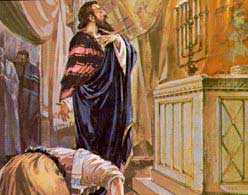
Self-righteous piety and worldliness–they are two of the most dreaded toxic poisons any church can swallow. As in most things in life there are two ditches on either side of the path of life and Christianity usually swings back and forth like a great pendulum between the two extremes with very few people letting go at the right time and finding the road of balance beneath their feet.

The Church desperately needs to cultivate persons whose outlook on life is to be capable of being “all things to all men so that by all possible means I might save some” (1 Cor. 9:22-23). I love the fact that Paul could hang with the rough and rowdy Greeks and pagans, but he could also hold his own with the stoic, cynic philosophers in Athens– not to mention break sabbath bread with the strictest of Jews who still lived under the mosaic law. He was unafraid and multi-comfortable with different elements and personalities–just like Jesus. Yet I feel the church in some circles has become so rigid and inflexible that we simply want to make xerox copies of our flat, two dimensional spiritual lives and proclaim it as the gospel.

We need an army of 3 dimensional Christ followers– true disciples whose internal depth of understanding, compassion and truth goes beyond surface appearances on a Sunday morning. Let it never be said of us, “they have a form of godliness but deny its power” (2 Tim. 3:5).

-StriderMTB

Posted in Church and Culture | Tagged , , , , | Leave a comment

Shedding Self-Righteous Spirituality: Part 1

There is a path of life laid out for us to tread upon, but given time some Christians unfortunately manage to fall into one of two ditches. On the one side you have Christians professing Christ, but they are so worldly you can hardly distinguish them from the rest of the world. But on the other side you have Christians who act and speak more spiritual than Jesus! This is what I principally want to address.

Presenting a face of Christianity that is more “spiritual” than Jesus is one of the larger problems in the church today. We have forgotten how to connect with the common sinner!‎ As Bill Johnson once said, “It’s not good when Christians try to do business only with other Christians. We are salt and light. We shine best in dark places!”

Today Christians have developed their own subculture of Christian music, Christian movies, Christian fashion, Christian lingo– but above all– hyped-up Christian “spirituality” that I find quite repugnant the more I see it. The latter is rooted in self-righteousness and masks itself as spirituality. But it is pseudo-spirituality. It is the same “spirituality” the Pharisees exhibited who judged Jesus for drinking and dining with tax collectors and harlots. In the Bible we read about how the lower elements of society were attracted to Jesus. He attended their parties, ate meals with them, laughed with them, drank their wine (even made their wine!) and shared life with them. What ever happened to that Jesus?

We make Jesus so unattainable, untouchable, unapproachable and irrelevant to sinners today. In Mt. 11:19 and Luke 7:34 it says the “religious” people in Jesus day called Jesus a “a glutton and a drunkard and a friend of tax collectors and sinners” because he was often found eating, drinking and spending time with broken people whose sin was an obvious, observable stain on the outside (as opposed to the hidden and concealed stain of sin like that of the Pharisees who Jesus described as pristine, whitewashed tombs on the outside with the smell of rotting flesh and bones in the inside).

I particularly love the fact that they called Jesus a “drunkard.” Of course we know that Jesus never got drunk, but at minimum this passage does tell us that Jesus’s spirituality wasn’t above drinking the same wine that other people were getting drunk on–i.e. Jesus drank alcohol with sinners. So why is it that many Christians today try to qualify, validate and endorse their faith by saying, “I’m a Christian because I’ve never let alcohol touch my lips!” Why is this the litmus test of faith so many look to to substantiate their own spirituality and then seek to impose on others? If Jesus chose to reject the Nazarite Vow for himself and was able to kick back with tax collectors and sinners and meet them on their own terms over a cup of wine, why can’t we?

This is just one example on how the church has lost touch with the Jesus who didn’t wait for people to become ex-prostitutes and ex-drunkards before he chose to befriend them.  We often like to maintain a comfortable distance between us and the “sick who need a doctor” that Jesus declared he came for (Lk 5:32). You know– a Christian “caste” system that allows a healthy degree of separation between “us” and “them” and serves as a self-righteous reminder to ourselves and others that at the end of the day we are– just better people. But the fact is we are all sick and we are all blind (Jn. 9:39). For “God doesn’t show favoritism… [but] everyone who believes in Him will receive forgiveness of sins (Lk 10:34-43).”

But no matter–the illusion that we are better and superior must be maintained. We wear our most expensive, prettiest, Sunday-morning dress-up clothes to worship God in; we avoid spending time with worldly sinners as if they have leprosy; we content ourselves to sit in judgment on all the easy targets of our day– gays, the divorced, teenage mothers, the drug addicted. You know– the “prostitutes, tax collectors and drunkards” of our modern culture.

The last thing we would feel comfortable doing is sitting down and sharing a meal with any of those pagan sinners like Jesus did. We wouldn’t know how to act, what to say, or how to say it. We would end up not only making ourselves horribly uncomfortable but also those around us. Why? Because we have entered a world outside our little, safe, self-enclosed Christian bubble where it is easier to sit in judgement over sinners than to befriend them as Christ did. We have spent so much time with our “own kind” speaking “Christianeze” language and ending every sentence with, “all praise to God, glory to God” that we don’t know how to just sit still, turn-off our hyper-evangelistic agenda, and actually listen to people and return to them some of the dignity this world has taken from them.

Have you every asked yourself, “WHY did prostitutes and social rejects like tax-collectors WANT to spend time with Jesus?” After all–Jesus is the supreme goody-two-shoes of the universe! He is the squeaky clean, supreme, moral arbiter of all men. He is the absolute and total embodiment of the “holier than thou” catch phrase! Of all people, you would think they would feel so much loathsome guilt and condemnation just being in His “holier than thou” presence it would be like repellent to a mosquito.

So why did Jesus attract them like honey?

Why did a harlot seek him out in his last hours and why was she willing to bear the accusatory stares of the pious as she washed his feet with her hair?

Will look at this more in Part 2.

-StriderMTB

Posted in Church and Culture | Tagged , , , , , | Leave a comment

The Blind Beggar and Pharisees–Who is Blind?

Read John 9. Read the whole chapter. There is so much packed into this small narrative. Today my good friend Dr. Fred Toke shared in a gathering some insights on this story. They are worth sharing in condensed form here. As you read this story one is struck by a few nuggets of irony that John doesn’t want us to miss. First off we see Jesus SPIT in the ground to make mud which he then uses to apply to his eyes. Why does Jesus spit? Keep in mind that in 1st century Jewish culture the Pharisees were teaching that blindness and all forms of disability was a direct result of sin in your life. Therefore it is quite possible to envision a scenario where as this blind beggar calls out day after day for money, some choose to SPIT on him. Here is the first twist of irony. Where before others spat on him to curse him, Jesus spits “on” him to heal him. Jesus has come to turn our evil into his good.

The second twist of irony is seen subsequent to his healing. He has just received his sight and as he is running around utterly ecstatic with joy, his own neighbors don’t even recognize him. Just think about that for a second. Here is this poor, blind beggar day in and day out wearing the same clothes, the same nappy hairstyle, holding the same walking stick, carrying the same mat under his arm–and his own neighbors don’t recognize him saying, “No–it only looks like him” (Jn 9:9). As fallen, self-centered people it is difficult to imagine those we view as beneath us escaping the confines we have imposed upon them. John implies the man is flabbergasted that no one recognizes him stating, “He kept saying, ‘I’m the one!” (Jn. 9:8). And here is the irony. They don’t recognize him despite passing him every day on the street for one reason only–his eyes are now open piercing back into theirs. Who is blind now?

Thirdly the Pharisees are shown to almost be incensed that Jesus would once again demonstrate a miraculous display of power they can’t explain. They desperately want to excuse away the healing and any suggestion that it could be of God. So they blow the whistle over a technicality. For you see Jesus once again healed someone on the Sabbath.

The third irony is found emblazoned all over their ensuing actions. In John 9:18 and 24 they summon both the parents of the man and then summon him a second time to demand answers to their questions! In essence they are holding court on the Sabbath to judge a man who healed on the Sabbath! Who is blind now?

A few more nuggets of insight are also worth mentioning. Being a psychologist Dr. Toke perceptively picked up on an issue of rejection that I never saw before. Remember–he was blind from birth and therefore he has never seen his parents. He has no idea what they look like. Imagine the scenario: he has just been summoned back to the temple to answer more questions. He has probably by now heard that his parents were also summoned and are inside the temple somewhere. He must have been filled with anticipation wondering what his parents look like! “Is that them? Or maybe that’s them over there!” All of a sudden his ears recognize a familiar a voice–a voice of rejection. And he knows he has found his parents. John says his parents feared the Pharisees and so they refuse to defend him, instead they pass the buck off to him to stand all alone. As John records,“His parents answered…Ask him; he’s of age. He will speak for himself.” His parents said these things because they were afraid of the Jews, since the Jews had already agreed that if anyone confessed Him as Messiah, he would be banned from the synagogue. This is why his parents said, “He’s of age; ask him.”

Just think about that! This should be the most joyful day in his parents life! Their son who was born blind can now see! Astonishingly instead of celebrating they have allowed a fear of being cast out of the synagogue–  in essence to be treated as an ostracized outcast like their son was for many years– to cause them to spurn their son yet again. Who is blind now?

In the end we find the now seeing beggar unflinching and unafraid before the religious garb of the Pharisees. In fact he ridicules them for their failure to explain to him how an individual they seek to demonize as a ghastly sinner could be used of God to perform a righteous miracle on his behalf. It is just too much for the Pharisees. Whatever pseudo-religious veneer they had in tact to temporarily hide their self-righteous ugliness comes sloughing off their faces and hearts as they retort, “You were born entirely in sin,” they replied, “and are you trying to teach us?” Then they threw him out” (Jn 9:34).

Again–just picture this. He has just been healed, his sight has been restored! “What a foretaste of good things to come,” he must have thought. And then almost immediately everything changes and he steps into a trial–literally and figuratively. A day which should have been the happiest most celebrated day of his life shockingly ends with him being thrown out on his rear end to be ostracized and spurned all over again–but this time as a seeing man.

And this is his state when Jesus finds him again. I just love this part of the story. John says, “But when Jesus heard that they had thrown the man out, HE FOUND HIM…”

He found him. Earlier in the day the life of this beggar and the life of Jesus converged together in healing. Then they separated going their different directions. Later when this poor beggar was forced to face an unexpected, heartbreaking trial alone–Jesus searches him out and finds him. Jesus does not forsake him to bare his trial alone. And the last we see of this man we find him saying, “I believe Lord!” (Jn 9:38).

We often here the tickling ear sermons of modern Christianity tell us, “When you become a Christian all your problems and trials go away.” This is a lie from the pit of hell. Anything which is packaged as the truth of the gospel yet is a falsehood is a lie propagated in hell. Peter clearly declares, “Dear friends, do not be surprised at the painful trial you are suffering, as though something strange were happening to you…” (1 Pt. 4:12). The Word of God never promises us that we will never face trials in this life–it only promises us that we will not walk alone through them. Jesus will find us and take our hand to face the pain together. This alone is our assurance and trust–not the avoidance of trial but the pledge to be found by Him in the midst of our trials and dark nights of the soul. For as he promises, “I will never leave you…lo i will be with you always.”

Posted in Devotion Life | Tagged , , , | Leave a comment

Lo Lo Jones: Commitment and Virginity

A few days ago I commented on a quote by John Maxwell who said, “Commitment is the result of choice, not conditions…commitment lasts when it is based on values.”

Today this quote came back to my mind and I felt the need to once again put my thoughts to “paper.” It seemed the big news of the day was that Lo Lo Jones, a beautiful…and I mean BEAUTIFUL… female athlete training for the Olympic track squad came out. No, no– not to say she was gay but to say she was a virgin. Oddly enough it grabbed many headlines on different news outlets. Lo Lo admitted she has been taken back by the stir it has caused. She insightfully made the tweet that far less coverage and interest has been given to well-known celebraties who come out with a sex tape!

In some ways the fact that it has been such a news story is a sign of how desensitized we’ve become to the plight of our own moral erosion as a culture. I was impressed with how she handled herself in a recent interview where she admitted that her commitment to stay a virgin until marriage was in fact harder than training for the Olympics! But she went on to say that she sees it as a gift– a gift she is committed to only giving one person in the context of marriage.

This got me thinking more about commitment. For you see I too am a card-carrying member of the V-club. And I faithfully pay my dues every year– hoping and praying it will be my last year. As I pondered my own virginity at the age of 35 (yikes!) I naturally began to ponder my own commitment to virginity until marriage… because commitment is indeed where it starts and ends. Many people today would say: “It’s not possible in this day and age to remain a virgin for so long! The conditions of our society have drastically changed and it is unreasonable and outright stupid to encourage people to attempt such self-control!”

But alas these remarks betray a failure to understand the power of commitment. As Maxwell says, “Commitment is the result of choice– not conditions.” I choose to remain a virgin until marriage not because of modern culture, but in spite of it. Moreover as Maxwell also insightfully reminds us, “Commitment lasts when it is based on values.” This is in essence the key. For when I think back in my own life and consider the obstacles and challenges of temptation that I have overcome (trust me, my virginity ain’t because of a lack of opportunities!) I am struck by the simple fact that I have remained committed to the underlying value of my virginity more than the basic concept of virginity.

In other words the value I have long sought to commit myself to is the desire to not only be faithful to my wife after I marry her, but I choose to be faithful to her before I marry her– despite not knowing her yet. Any commitment is possible to keep when you are committing to your own personal values. Only in doing so can you weather the storms of opposition, distraction and temptation. Never underestimate the power of one committed.

Posted in Church and Culture, Thought of the day | Tagged , , , | Leave a comment